Regenerated UX from vibe-coding
Customer–Relationship Manager interaction for an AI SaaS vision—showing how mid-corporate customers and relationship managers work with proactive AI insights in 2030.
Customer
Relationship Manager
Speculative design and strategic storytelling for Commercial Banking—giving leadership one shared picture of AI-enabled banking in 2030.
2024–2025
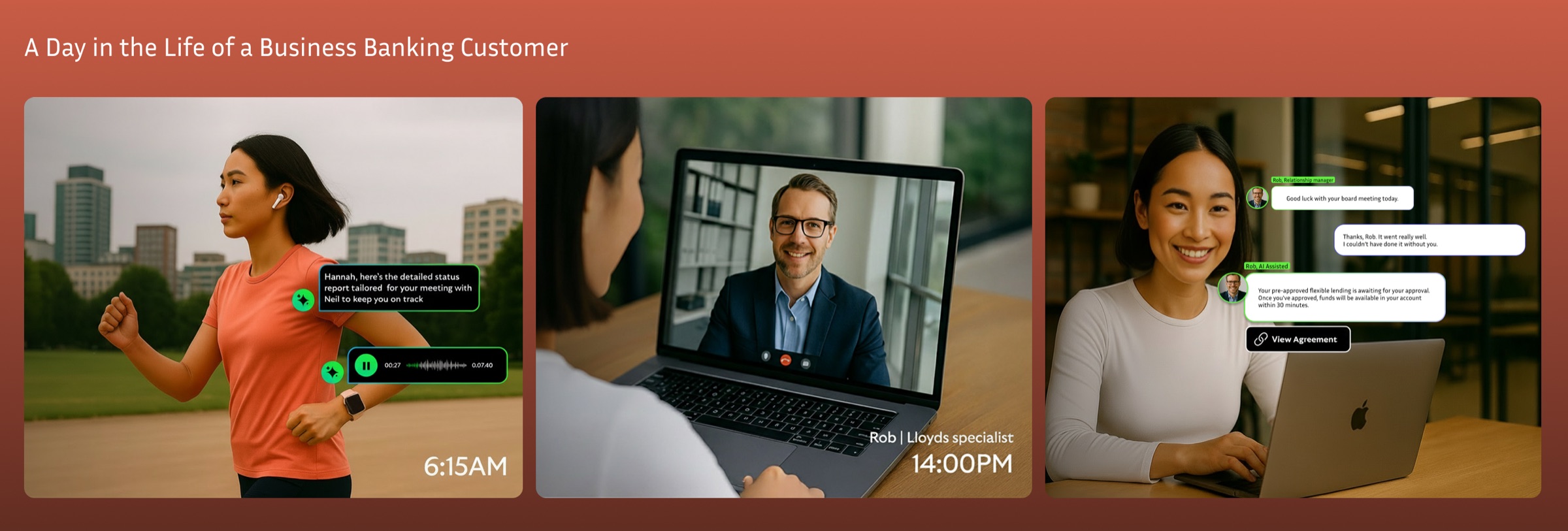
Customer–Relationship Manager interaction for an AI SaaS vision—showing how mid-corporate customers and relationship managers work with proactive AI insights in 2030.
Customer
Relationship Manager
Operating as an in-house design agency, the team ran 3-week sprints across different business areas — each one producing a future experience vision to align leaders and seed downstream product thinking.
Topics varied widely depending on the brief, spanning retail and business banking moments such as home buying, shopping experiences, and growing a business in future contexts.
Create a future-facing 2030 experience vision that would align teams across Commercial, Data, AI, Design, and Product on a single narrative.
Show how AI can handle routine financial monitoring proactively for business owners
Ground the 2030 customer journey in real banking constraints, not sci-fi
Ship a concept video and strategic deck ready for ExCo review
We built the concepts around five rules: contextual, conversational, proactive, composable, and invisible. The goal was to keep AI useful without adding noise.
As Product Designer on the Design Futures team, I played a role of a core narrative, UX, and concept-definition lead for the entire vision sprint.
Established the vision immersion board and facilitated workshops to align the team around core research, early design principles, and the target persona.
Collaborated with Experience Design and Applied Science to define barriers to business growth and identify high-value "AI-intervention" points in the customer lifecycle.
Facilitated cross-departmental synthesis through iterative storyboarding to align diverse future strategies into a single narrative anchored by strategic touchpoints.
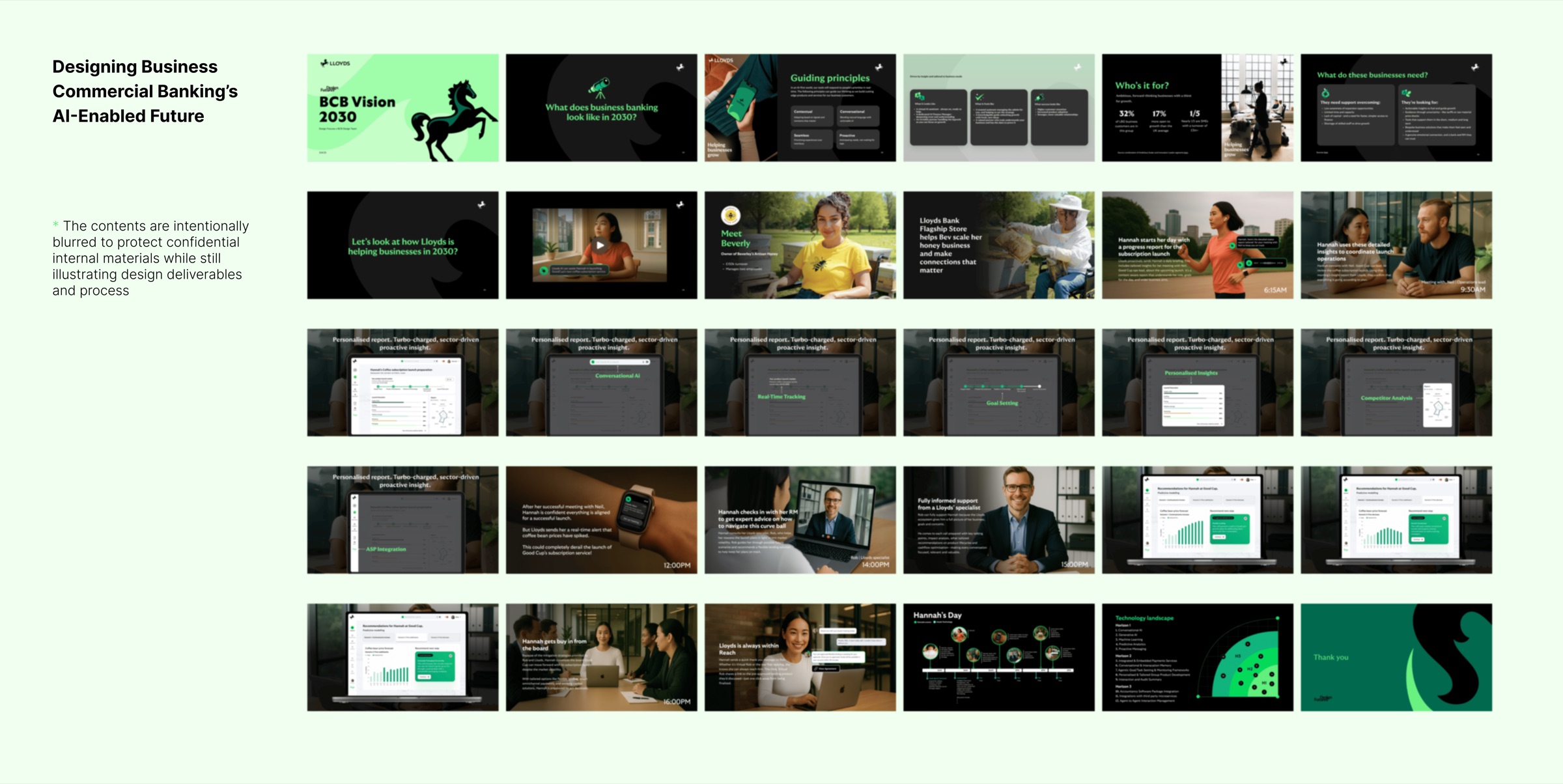
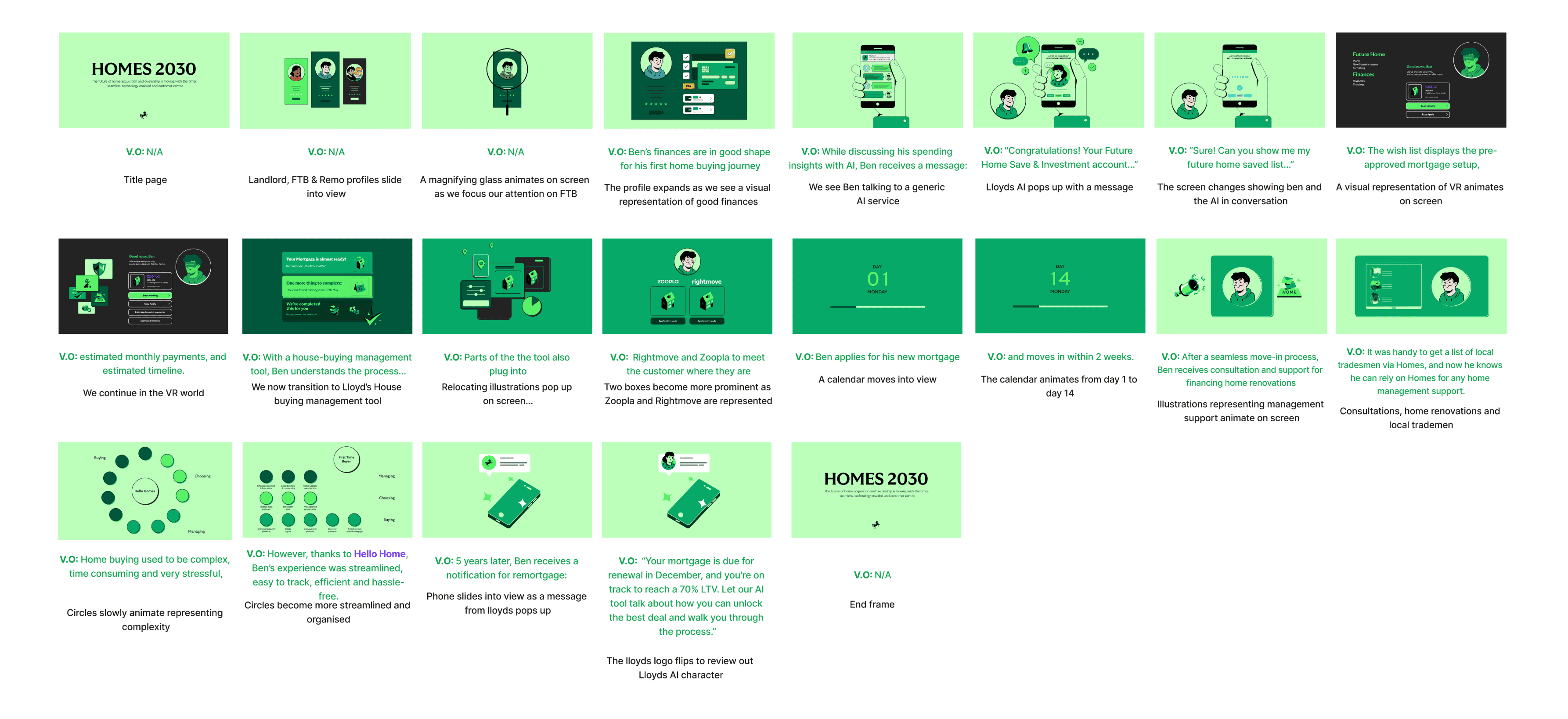
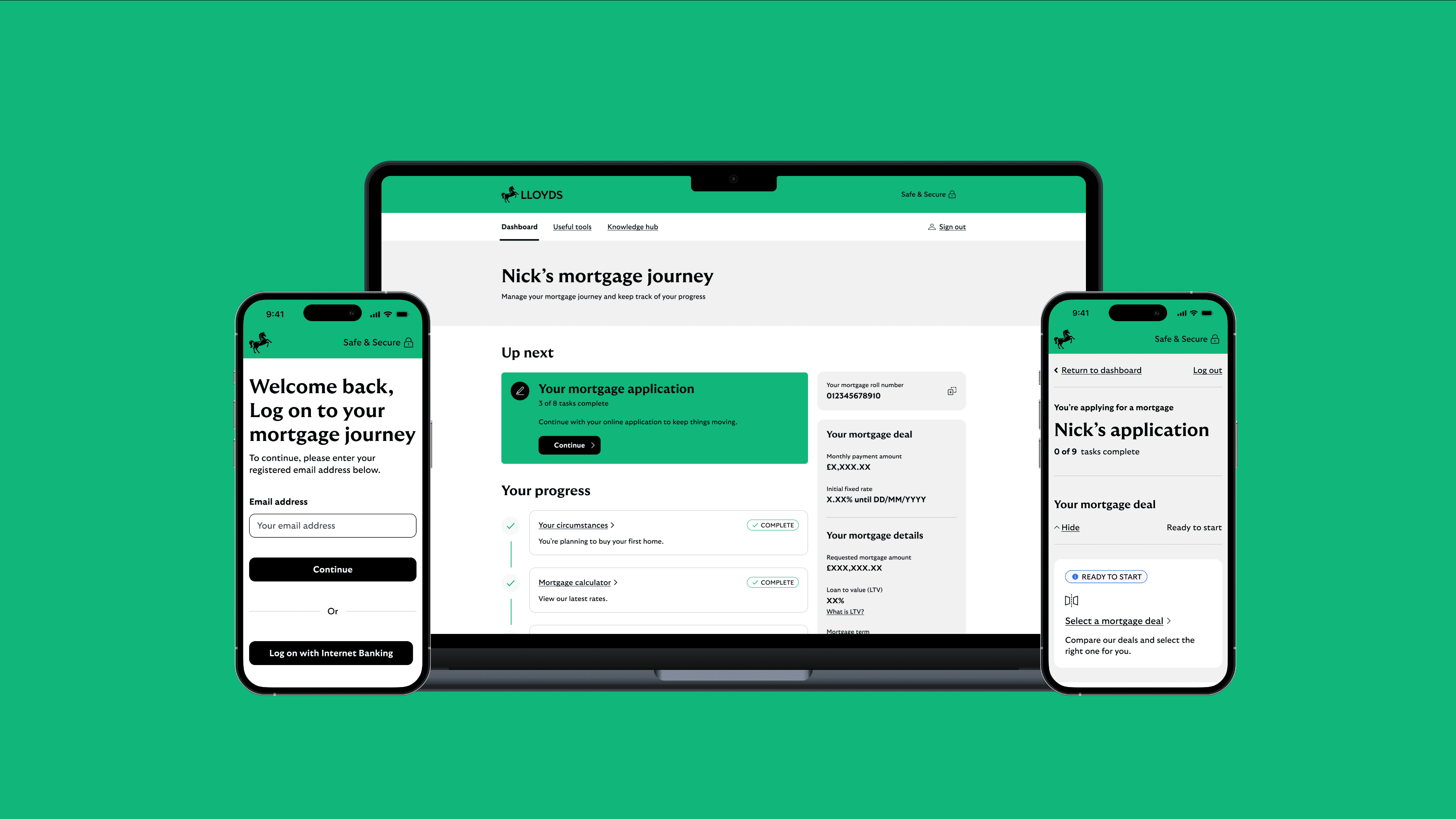
Worked with UI designers to integrate screens into the vision video, ensuring visual coherence and technical plausibility.
Co-led the production of the provocative 2030 vision video and strategic deck, ensuring version control and content accuracy across evolving concepts and UI integrations.
A vision sprint isn't a linear path from research to a video. This framework names the four moves the team made to keep a 2030 story anchored — desirable enough to provoke leadership, plausible enough to act on — and the handover that lets each business unit carry it forward.
Participated in multiple feedback loops with leadership teams, audit teams, and Product/Tech stakeholders to refine the narrative and strengthen the strategic proposition.
My work on the persona and scenario ensured the 2030 vision was cohesive, meaningful, and grounded in human-centric research.
Provided the structure and narrative logic that enabled rapid, high-quality collaboration across diverse teams (Design, Product, Data, Applied Science).
Grounding the story in merchant-services workflows turned an abstract AI pitch into concrete product questions.
We presented the work to ExCo and Group GenAI leadership, generating follow-on strategic sprint requests for the Design Futures team.
The 2030 Vision video and supporting deck went to ExCo and Group GenAI leadership as a provocation tool for Commercial AI planning.
The sprint aligned Commercial, Data, AI, Design, and Product around one shared narrative and five principles that still inform Business & Commercial Banking product discussions.