/ <In Dust>

<In Dust> — Virtual memory-scape VR experience

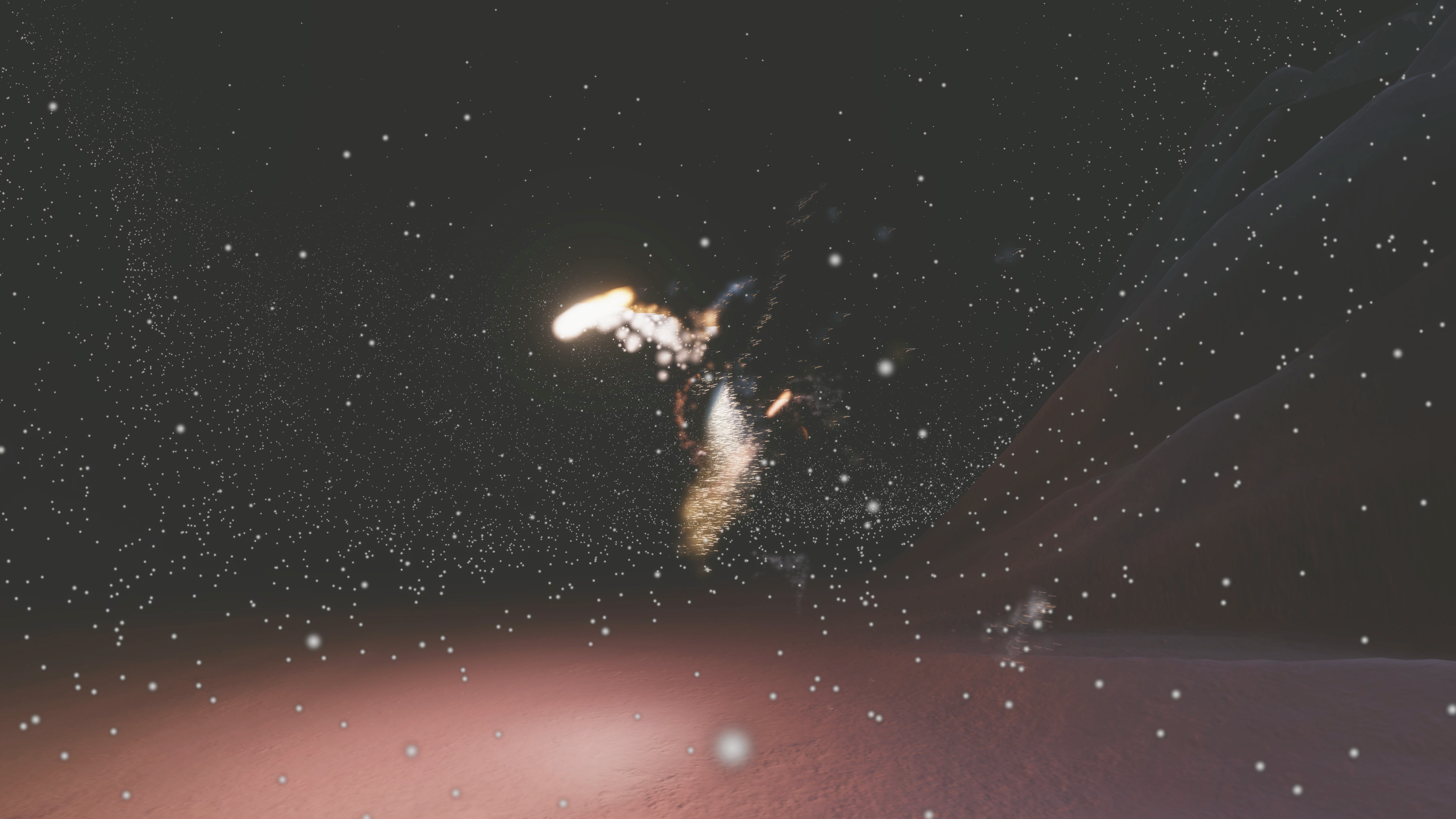
<In Dust> is a virtual memory-scape using dust as the guiding metaphor for our relationship with the planet and with each other — an experimentation of people's reconstructive memory in past, present and future, built from stories collected from 28 individuals.

2021

Context
Interactive Architecture Lab, The Bartlett School of Architecture, UCL
Team
Jee Eun Lee, Sofia Kovalenko, Laure Barthélemy
Tools
Cinema4D, Unity
<In Dust> — virtual memory-scape VR experience
Scroll

<In Dust> is a virtual reality world made up of swirling dust clouds, each containing an audio memory that the user could pass through and listen to. Concentrating on the idea of dust as a constantly growing individual story unit, the team created an immersive space where memory is navigated through the body rather than read or watched.

The project collected stories and memories from 28 individuals, exploring people's reconstructive memory across different times — past, present and future. It was developed at the Interactive Architecture Lab, The Bartlett, UCL in 2021.

The team began experimentation during lockdown, exploring the possibility of using the virtual world as a global connector between different localities and experiences. At the time, they were based in London, Moscow and New York — a separation which dictated the use of the virtual medium.

Concentrating on the idea of dust as a constantly growing individual story unit, the team created a virtual reality world made up of swirling dust clouds. Each cloud contained an audio memory that the user could pass through and listen to. The metaphor of dust — ever-present, invisible, connecting everything — became the core language for how personal memory circulates between people, places and times.

<In Dust> — project film, 2021. A virtual memory-scape navigated through swirling dust clouds, each containing an audio story from one of 28 participants.

<In Dust> was the direct precursor to <unspace>. The core concept — a navigable memory-scape where stories are encountered through physical presence and movement rather than passive viewing — carried forward into <unspace> as a physical, community-rooted platform.

Where <In Dust> operated in the virtual realm during a moment of enforced global separation, <unspace> brought that same sensorial logic back into the physical world — grounding it in a specific community, a specific place, and materials drawn from the land itself.

Continue to <unspace>

The sensorial platform <unspace> developed directly from <In Dust> — maintaining the concept of memory-scape in shared time and space, and bringing it into the physical world with Hackney Wick residents.

View <unspace> case study →