I led service design across a multi-team delivery environment, working across Commercial Banking, Markets, Client Data & Analytics, and our third-party partner (CoBa). My job was to govern experience quality, align partner design delivery, manage end-to-end journeys, and run stakeholder sign-off.
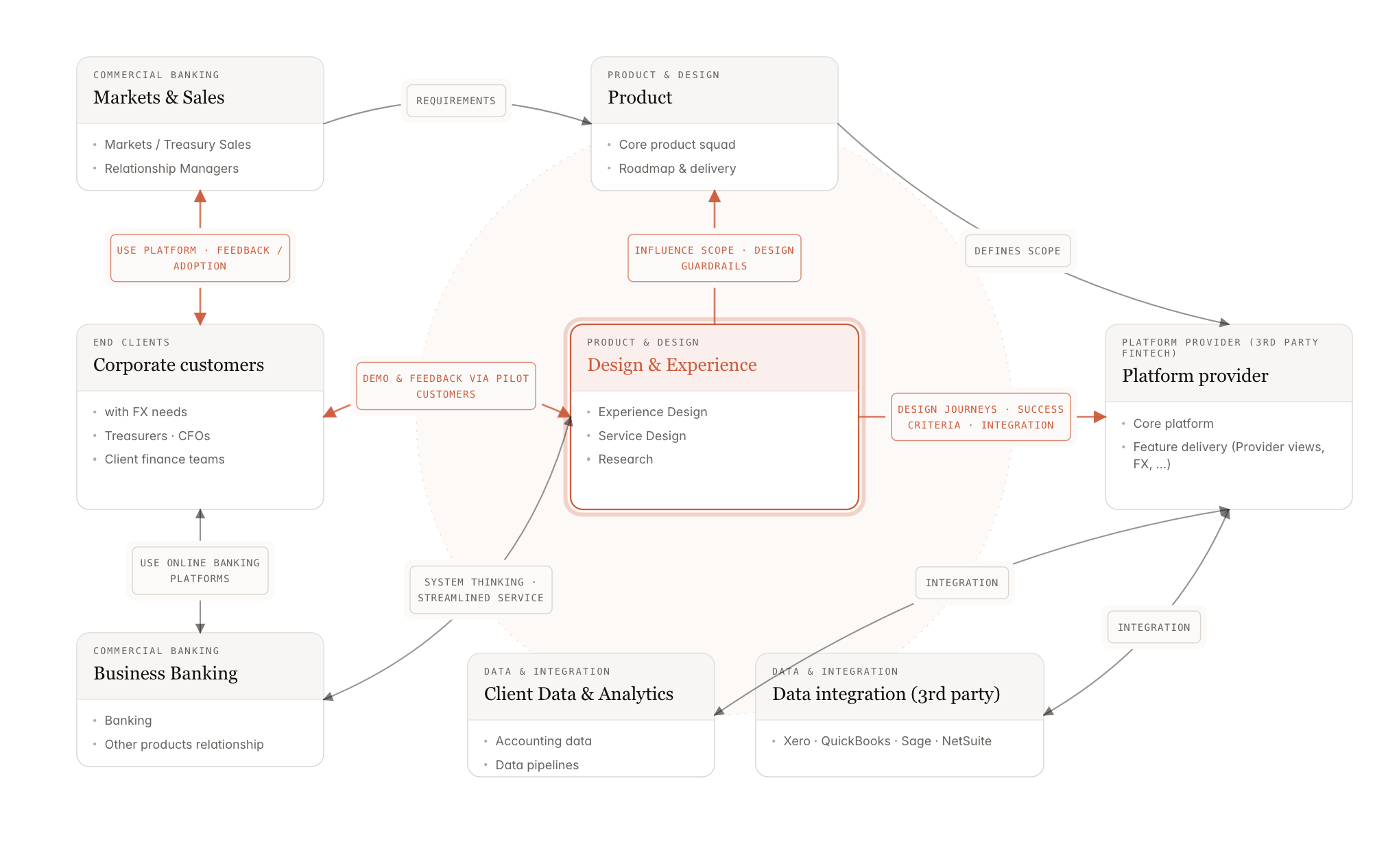
Rather than designing isolated screens, I designed the operating model: how four internal teams and an external partner would collaborate, hold a consistent quality bar, and measure client value beyond launch day.
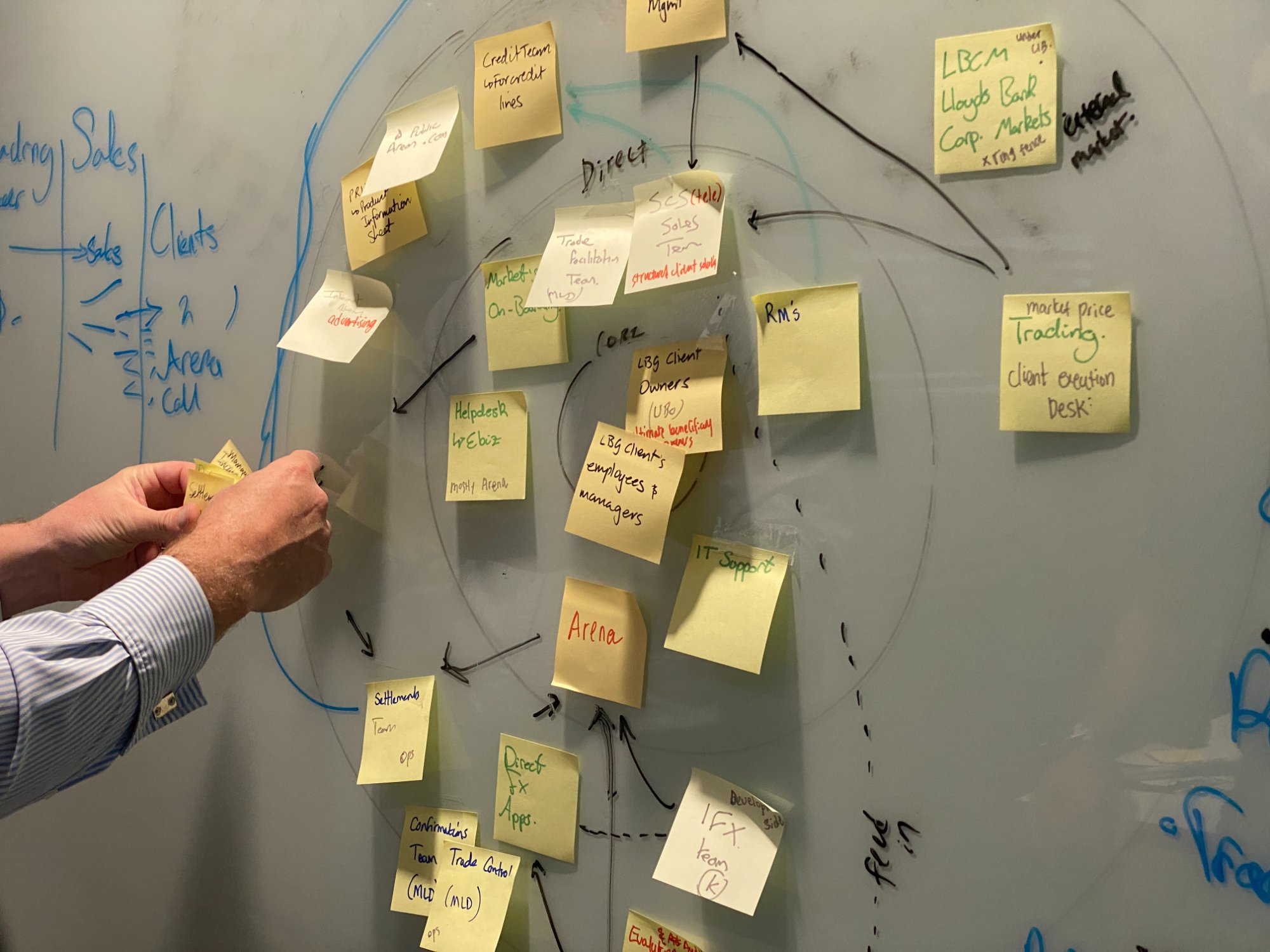
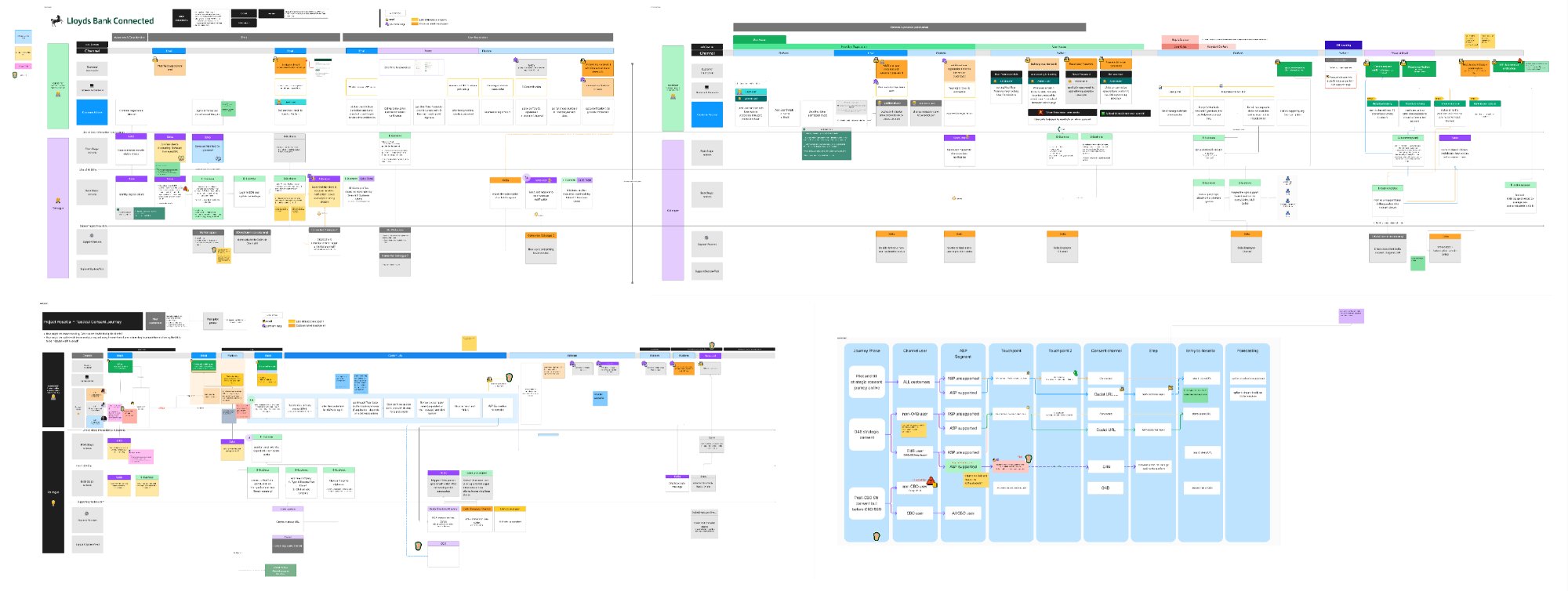
Stakeholder ecosystem mapping workshop — identifying all actors across Commercial Banking, Markets, and Partnerships to establish the operating model.
The problem
Commercial Banking clients were executing 63% of their FX transactions with competitors—revealing major leakage and unmet needs in Lloyds' FX experience. Clients wanted a simple, digital way to view exposures, ingest accounting data, and hedge FX risk without relying on telephony.
63%
of FX transactions executed with competitors
Experience goals (based on user research)
01
Give SMEs a clear digital view of FX exposure without relying on phone calls
02
Let clients manage FX risk more frequently using live accounting data
03
Free relationship managers from routine FX queries so they can focus on complex advice
The challenge
Embedding a third-party FX platform into Lloyds meant meeting strict brand, accessibility, and contractual standards.
The partner UI had to feel native to Lloyds while we removed friction across onboarding, data integration, user management, and FX booking.
Key delivery challenges
Fragmented delivery environment: Multiple teams ran on different timelines, and key roles like solution architect and E2E testing manager were initially missing.
Complex data ingestion journeys: Data flows between CD&A, Markets, and the third-party platform needed mapping, risk review, and clear UX flows.
Third-party experience quality: The partner's build had to meet Lloyds' brand guidelines, accessibility standards, and UX bar.
End-to-end journey friction: Handoffs kept breaking across onboarding, consent, data integration, FX booking, and user management.
Experience debt: Without a measurement framework, front-line staff absorbed friction over phone and email. That kept clients happy short-term, but did not scale.
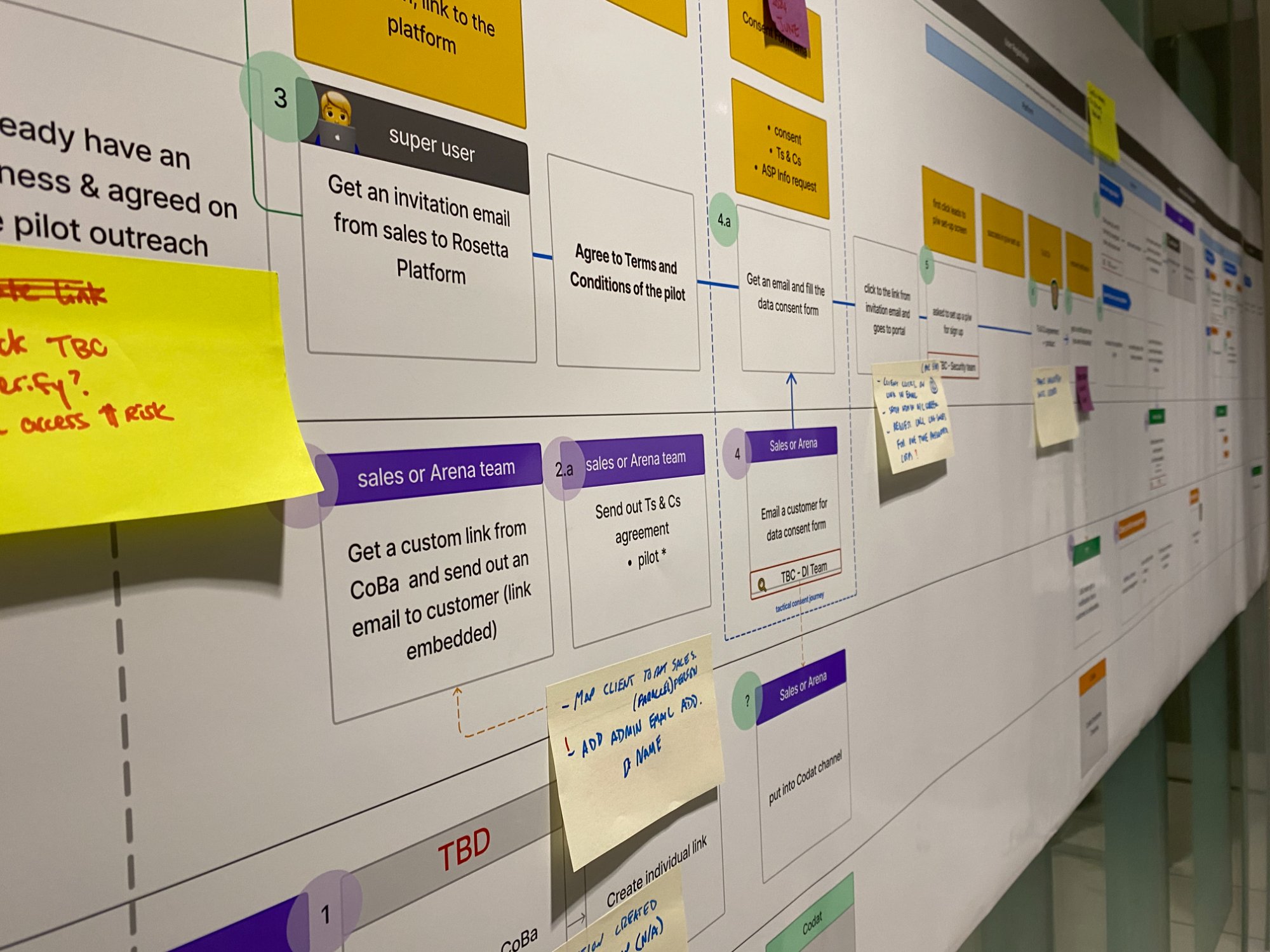
As-is service journey mapping — documenting existing onboarding, consent, and FX booking flows across all touchpoints to surface friction points before redesign.Stakeholder ecosystem and design responsibility — illustrating the complexity of cross-team alignment required across the third-party integration, internal working groups, and design ownership.
My approach
I tackled these challenges through a combination of strategic orchestration, hands-on journey design, and operational rigor.
Established the experience operating model
Introduced a design-led operating model with weekly design governance, structured feedback loops, and a shared view of dependencies across teams. This created the alignment infrastructure that was previously missing.
Mapped complex data flows into sharable artefacts
Worked directly with Client Data & Analytics and Markets to map data flows, risks, and gaps—then translated these into service flows and UX artefacts that non-technical stakeholders could understand and act on.
End-to-end service journey map — charting client and colleague flows across onboarding, data integration, FX booking, and user management, shared across four workstreams.
Governed third-party design quality
I ran weekly design reviews with the third-party partner, giving specific feedback against Lloyds' brand and UX standards before each release so the product felt native.
Identified and prioritised journey friction
Conducted end-to-end journey assessments across onboarding, data integration, consent, FX booking, and user management. Documented friction points and fed improvement opportunities directly into product and engineering backlogs.
Reframed success measurement
Applied internal Design Excellence assessments and DAC accessibility reviews to establish a shared understanding of experience success—shifting the conversation from "did we launch?" to "did we create client value?"
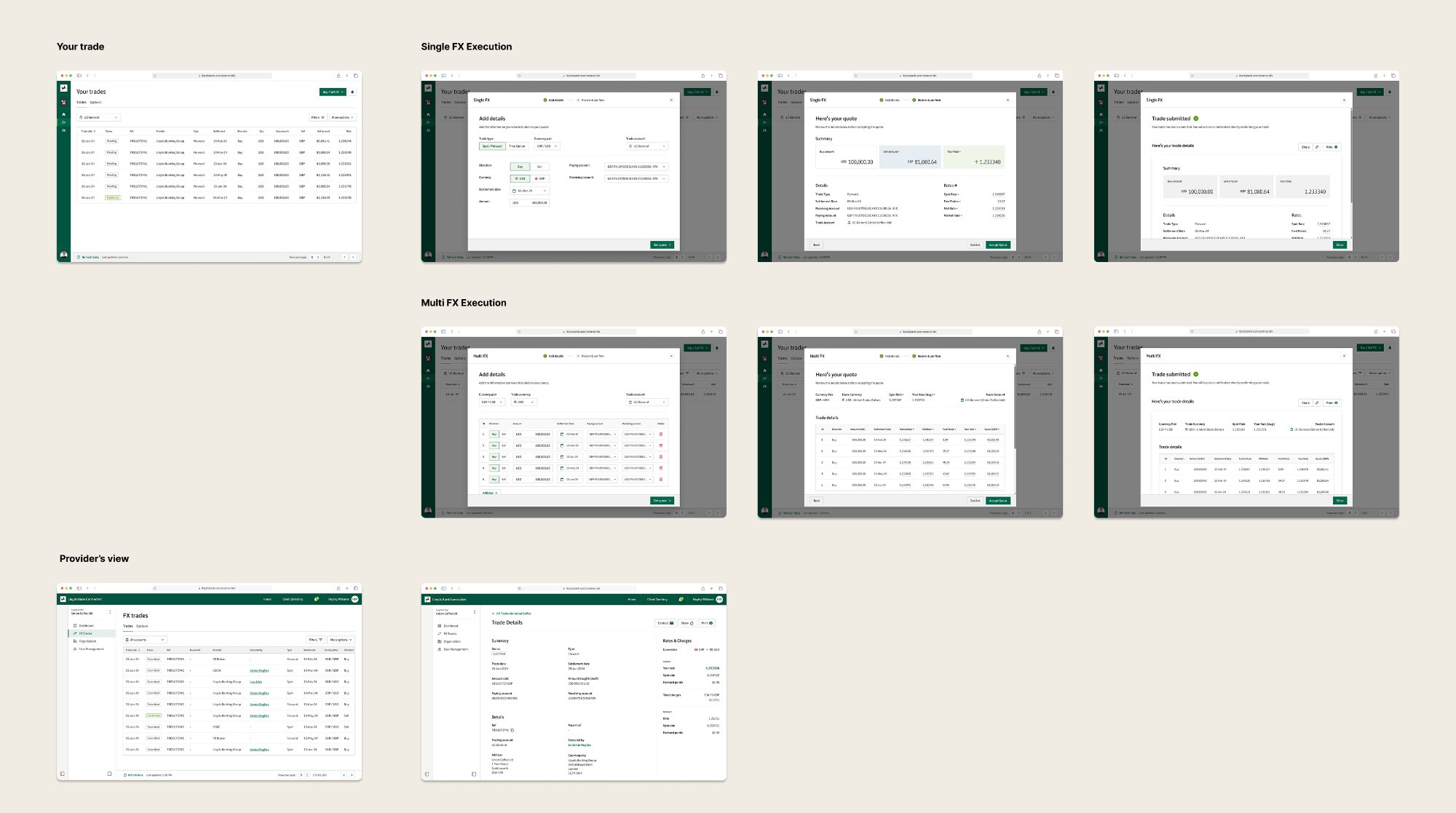
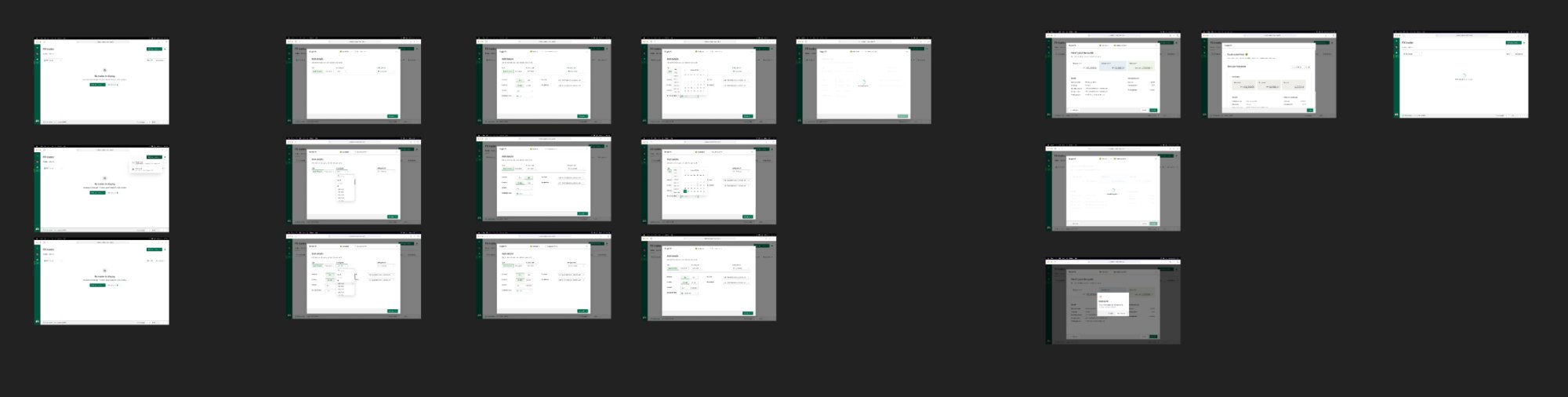
Early wireframe explorations — iterative screen designs for the FX booking flows, tested with clients before partner handoff for build.Single & Multi FX execution flows — final screen sequences covering trade entry, quote review, and confirmation for both individual and bulk FX transactions.
My impact
Key contributions
✓ Established the experience operating model between Lloyds Banking Group and third-party partner (CoBa)
✓ Defined end-to-end client and colleague journeys, shared across workstreams to support alignment and delivery
✓ Ran weekly design governance sessions, identifying risks and driving continuous journey improvements
✓ Established success-measurement approach using Design Excellence assessments and DAC accessibility reviews
Shipping a third-party platform inside a bank meant designing how four internal teams and an external partner reviewed, measured, and signed off on the work together.
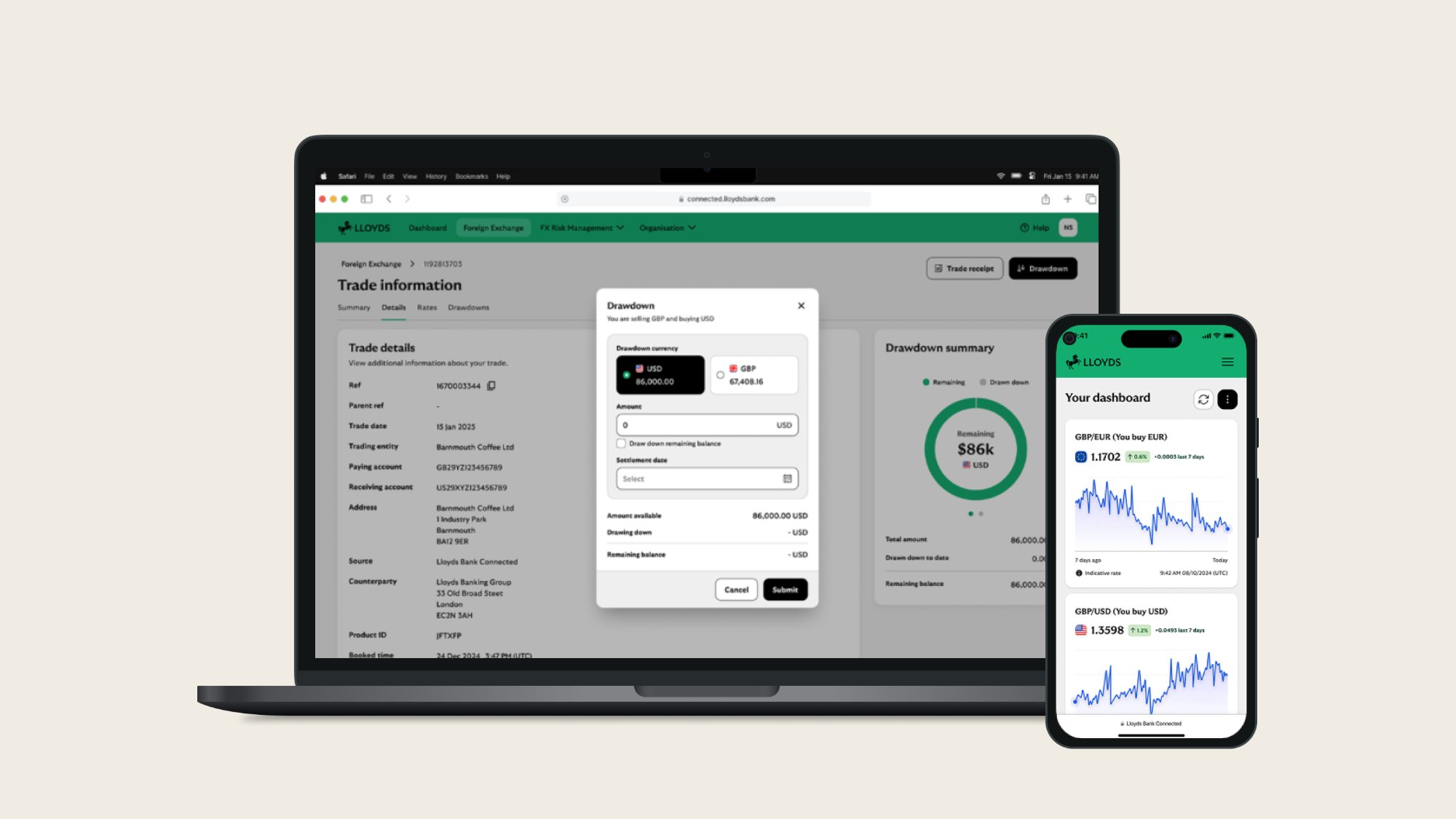
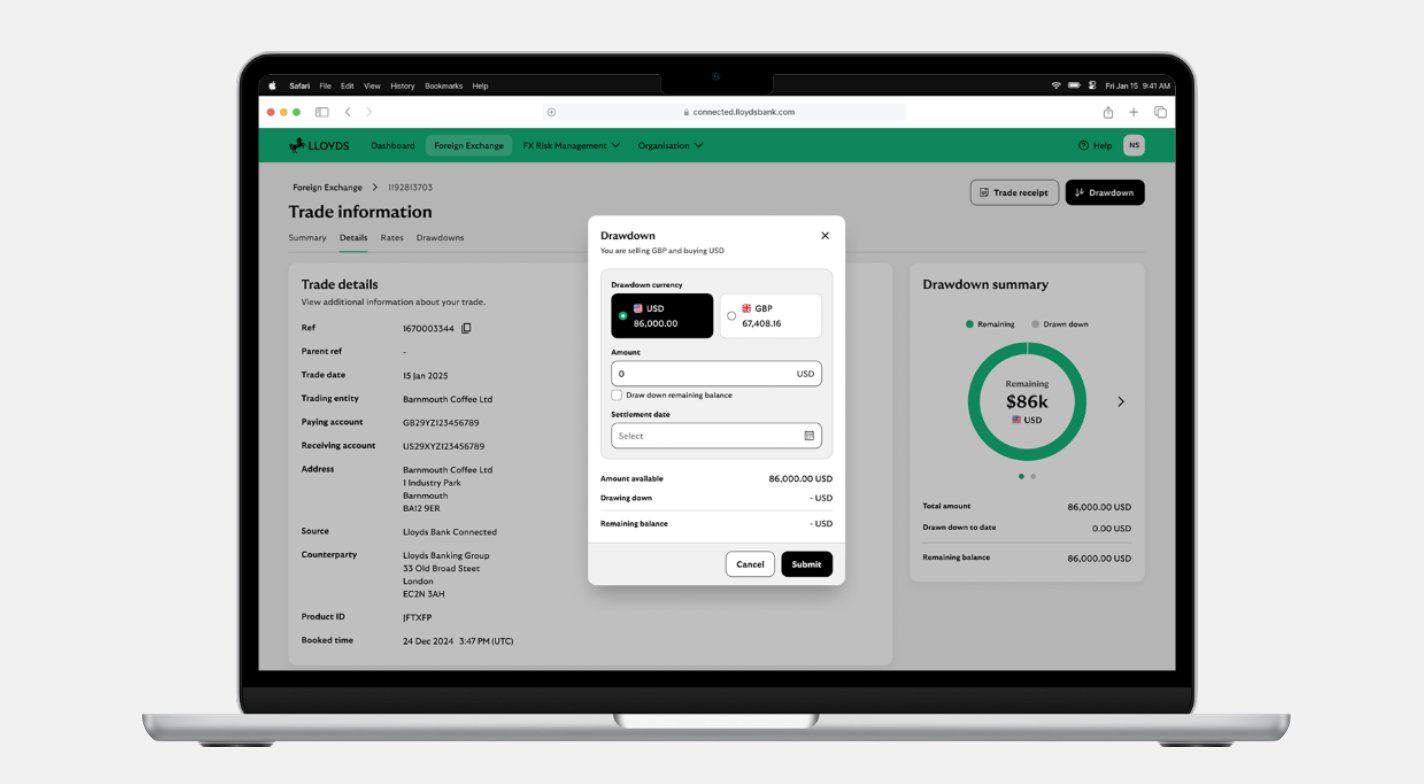
The delivered platform — FX Risk Management dashboard showing trade information, drawdown flow, and live rate monitoring across desktop and mobile. Live on Lloyds Bank Connected.
"The hardest design problem wasn't the interface. It was designing how four internal teams and an external partner would build and sign off on it together."
What I learned
Enterprise service design is half interface craft, half coordination. The most useful artefact I produced wasn't a single screen; it was the weekly operating rhythm that kept four teams and a vendor aligned on quality.
In hindsight
I would run a ways-of-working workshop at the very start and step into design leadership earlier, rather than sorting out review rhythms mid-flight.
I also learned where to draw the line on transparency. Keeping the process open helps, but sharing rough "draft-draft" work too widely slowed down sign-off—showing a coherent final draft keeps stakeholders focused on the right decisions.