<unspace> — Audio-spatial platform for community memory
A physical-digital platform for local communities to preserve and share their stories through sensory, audio-spatial experience — built with residents of Hackney Wick as a tool for resilience in the face of rapid gentrification.
2021
Context
Final Project, Interactive Architecture Lab, The Bartlett School of Architecture, UCL
Role
Design Researcher, Interaction Designer
Team
Jee Eun Lee, Laure Barthelemy, Sofia Kovalenko
Tools
Unity, Kinect
Scroll
Project intro - Audio-spatial platform for community memory
Research question
Community resilience through an interconnected platform of memories in time and space: how do we build a new sense of community and resilience in a socio-ecological system?
<unspace> is a platform for local communities to preserve and share their stories and memories in time and space. A community-oriented felt archive, it foregrounds the sensorial, exploratory feel of memory — letting users navigate a community's history through physical experience rather than passive documentation.
The platform combines a physical interactive installation — composed of materials drawn from the locality's own history — with an audio-scape built from interviews conducted with community members. A companion digital platform documents the growing archive and makes it accessible beyond the physical space, with the long-term ambition of expanding to communities globally.
Phase 1 — Community outreach
Hackney Wick: a community under pressure
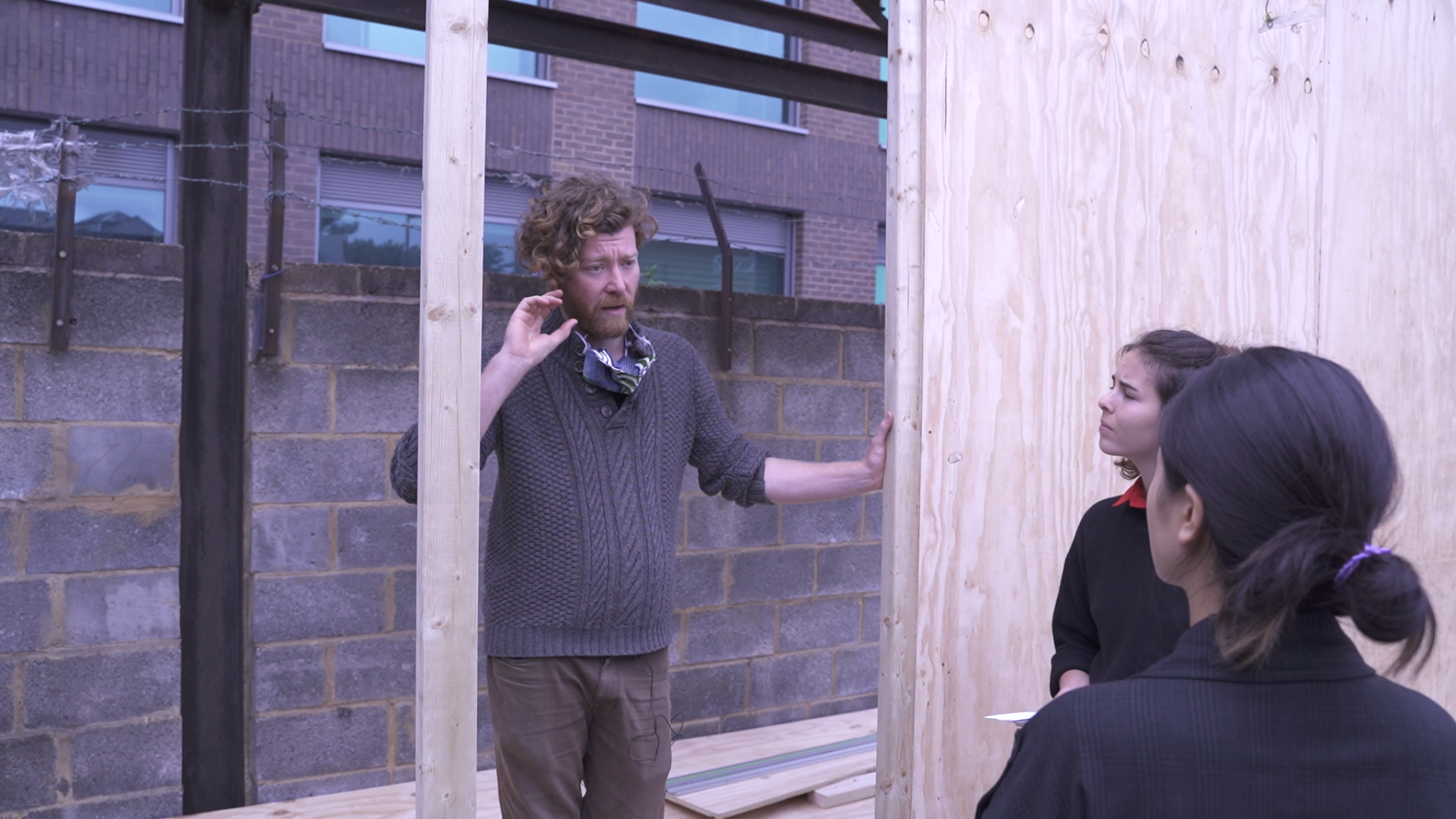
Our first collaborator was Hackney Wick — a community in East London endangered by gentrification and ongoing redevelopment. We began by conducting a series of interviews with local residents to understand how the neighbourhood operated, what its history felt like from the inside, and what its people needed.
The network of residents and places we encountered was remarkable. From interactions both on and off the record, <unspace> took shape not just as a tool for sharing stories with the world, but as a space for residents to engage in the healing process of remembering in the face of rapid change.
Community interview — engaging with Hackney Wick residents on site to understand how the neighbourhood operates and what it means to its people.
White Walls exhibit — first public showing
The White Walls exhibit is an initiative by inhabitants of the ex-warehouse unit Oslo House — a bi-monthly showcase of local artists in their hallway. One of our interviewees invited us to participate in August 2021. For this occasion, we created and presented a documentary video of our research and interview footage — the first time <unspace> was presented to the Hackney Wick public. Content shared online generated wider community interest in the project.
White Walls exhibit — the first public showing of <unspace> to the Hackney Wick community, presented at Oslo House in August 2021.
Phase 2 — Materiality & soundscape
Sensory experience
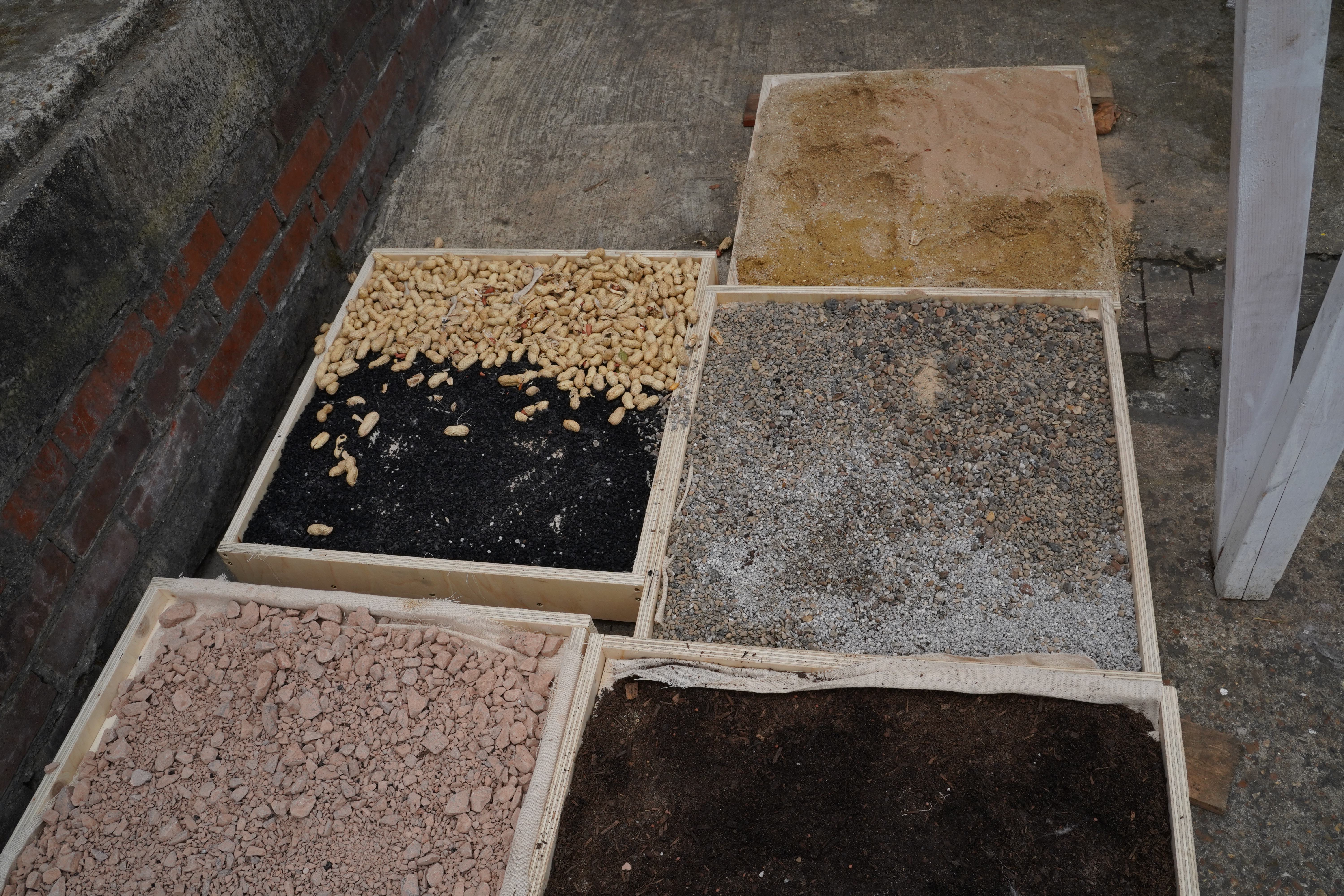
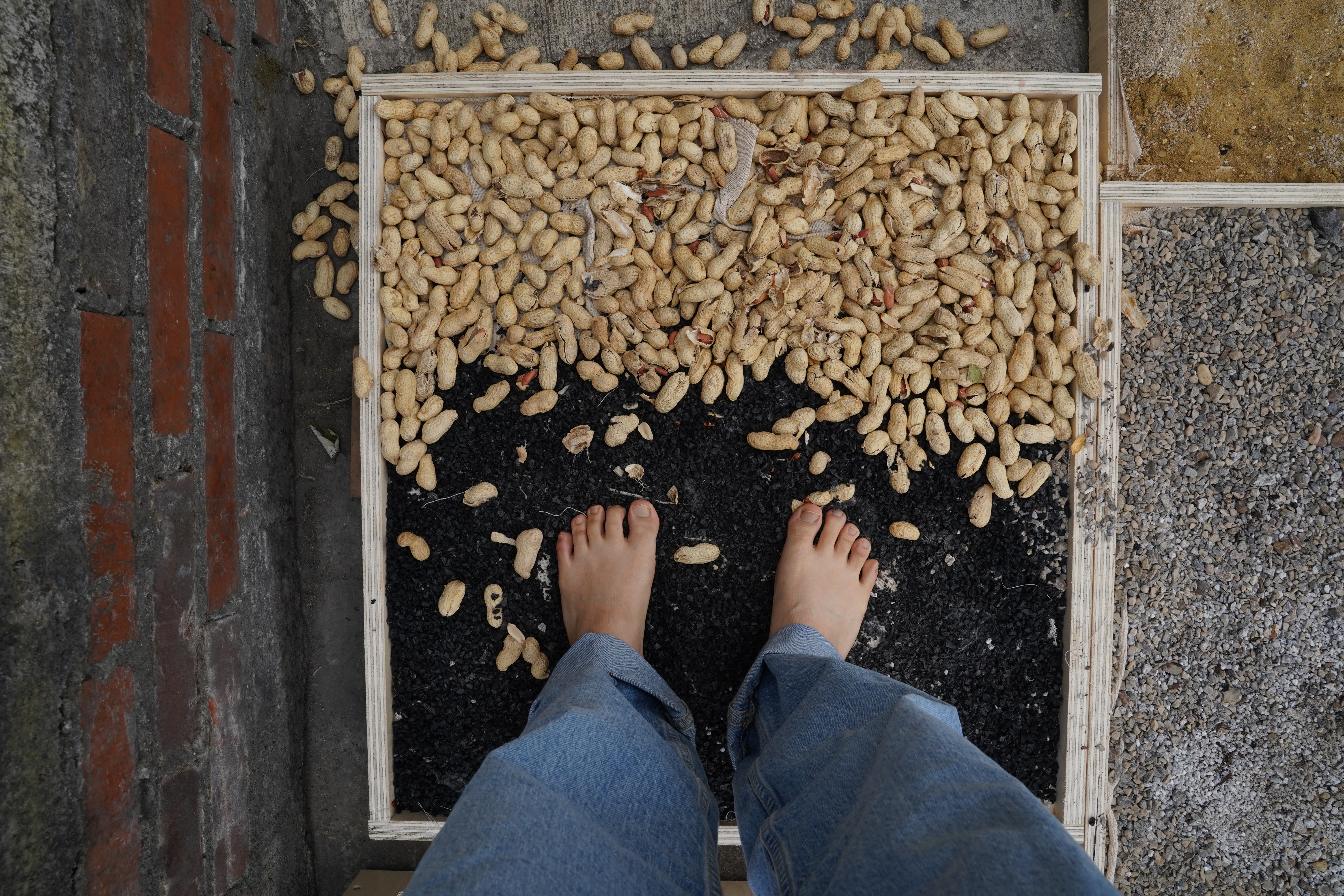
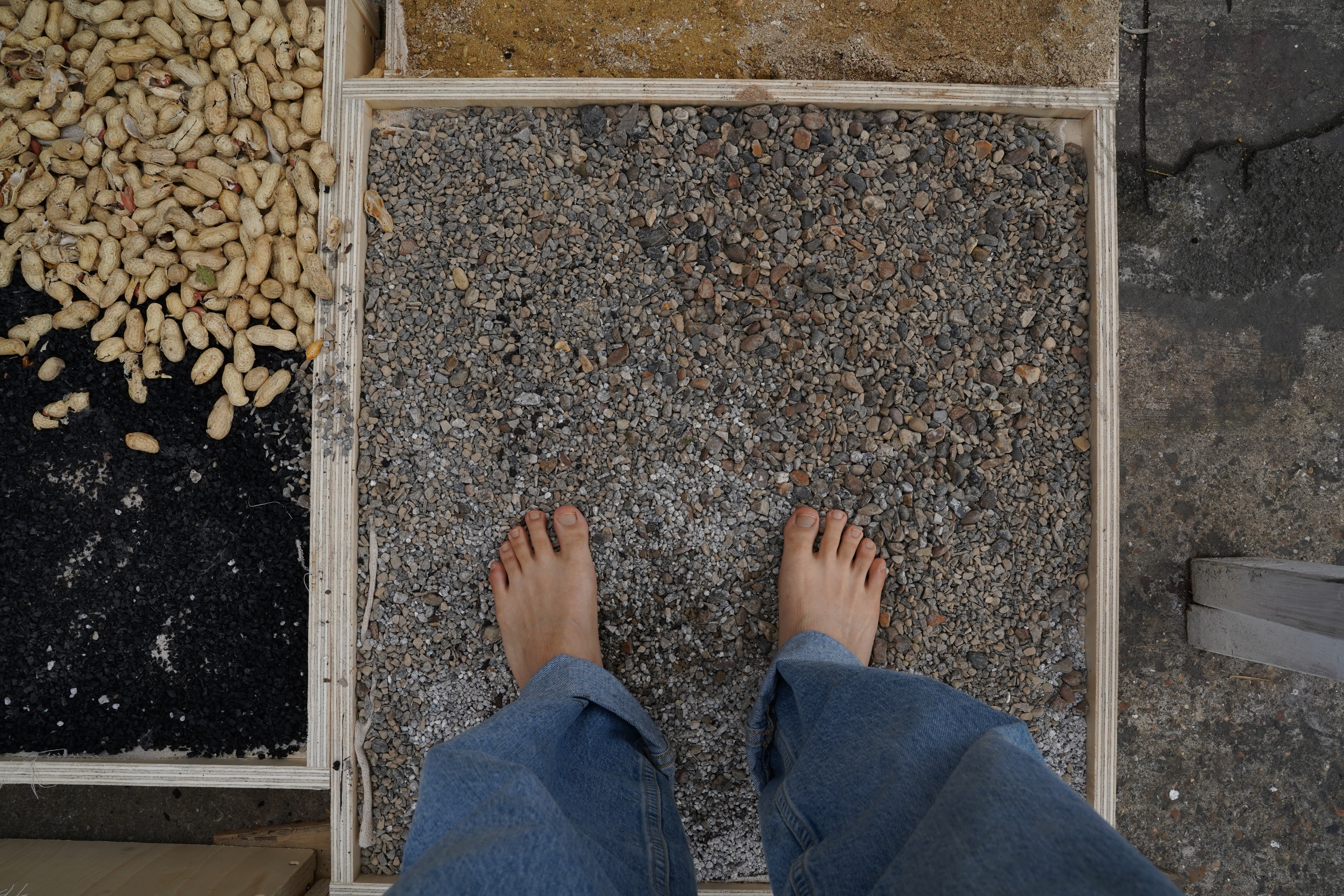
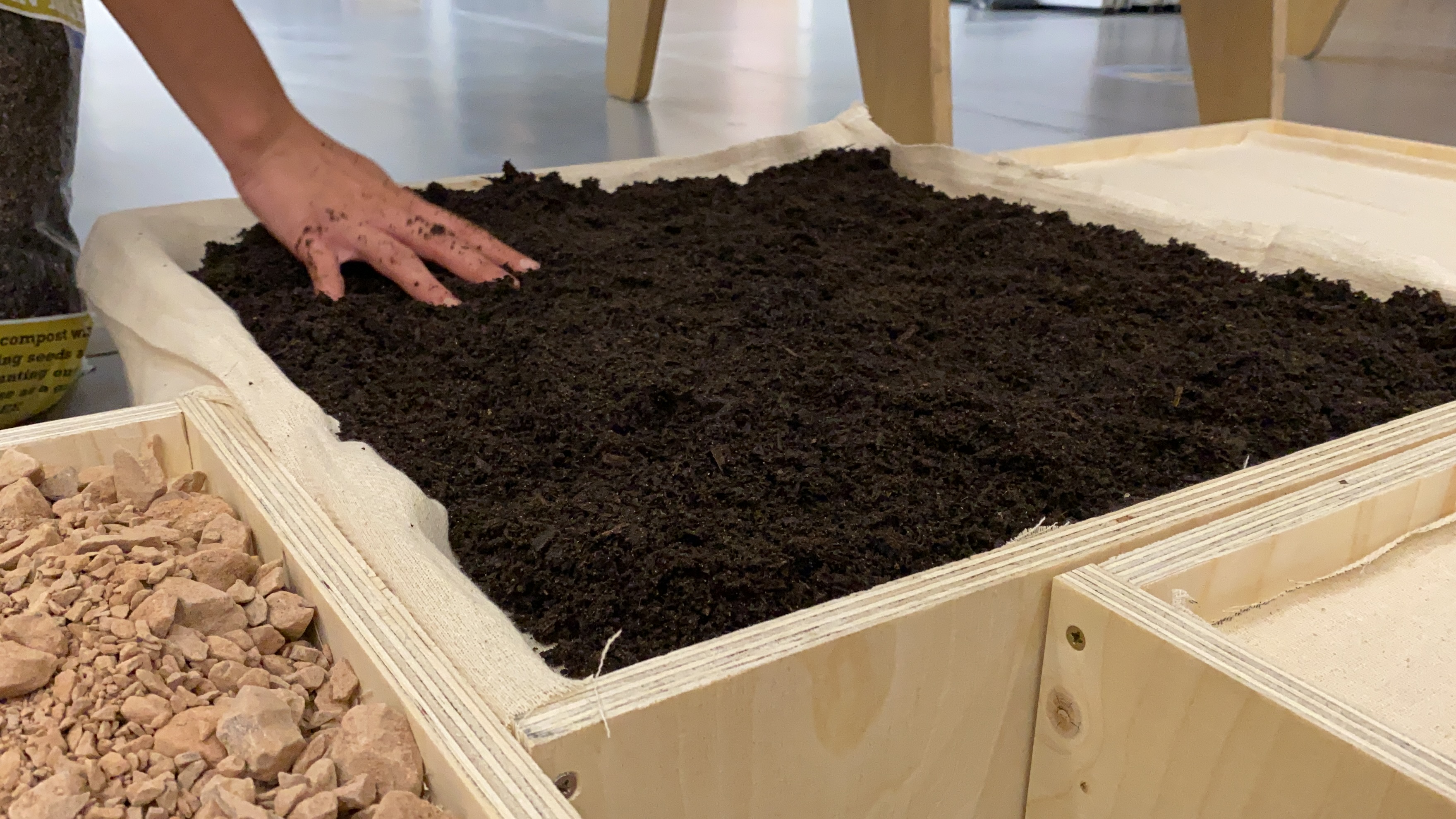
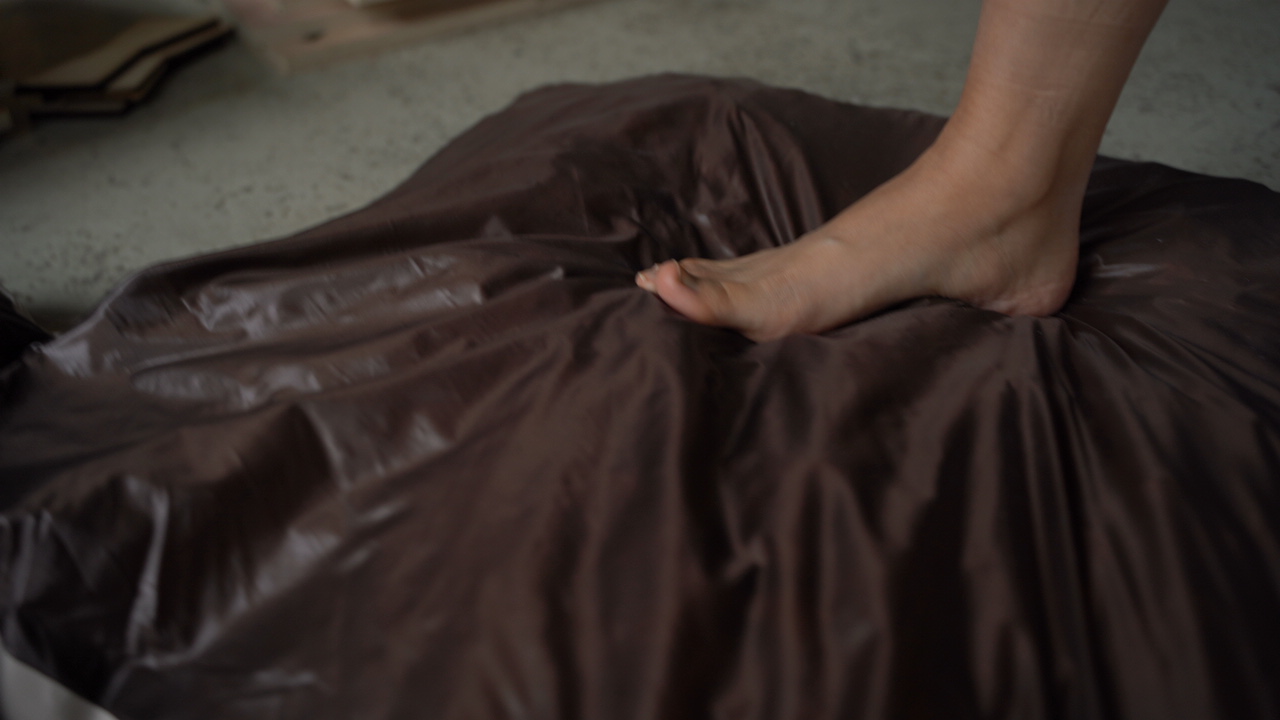
In the first prototype, the team used physical materials as a sensorial and visual medium — creating connections between the physical and virtual memories of the community. Materials referenced both the industrial past of Hackney Wick and Fish Island (peanuts, rubber, silk) and the ever-present textures of the area today (soil, sand, gravel, bricks, pebbles from Hackney Marshes and the canal-side). The contrast of textures and temperatures was intentional — evoking a range of sensations for people to navigate while listening to the audio-scape.
Sensory materials & first platform
Material palette — soil, sand, gravel, pebbles, and peanuts arranged across the platform surface
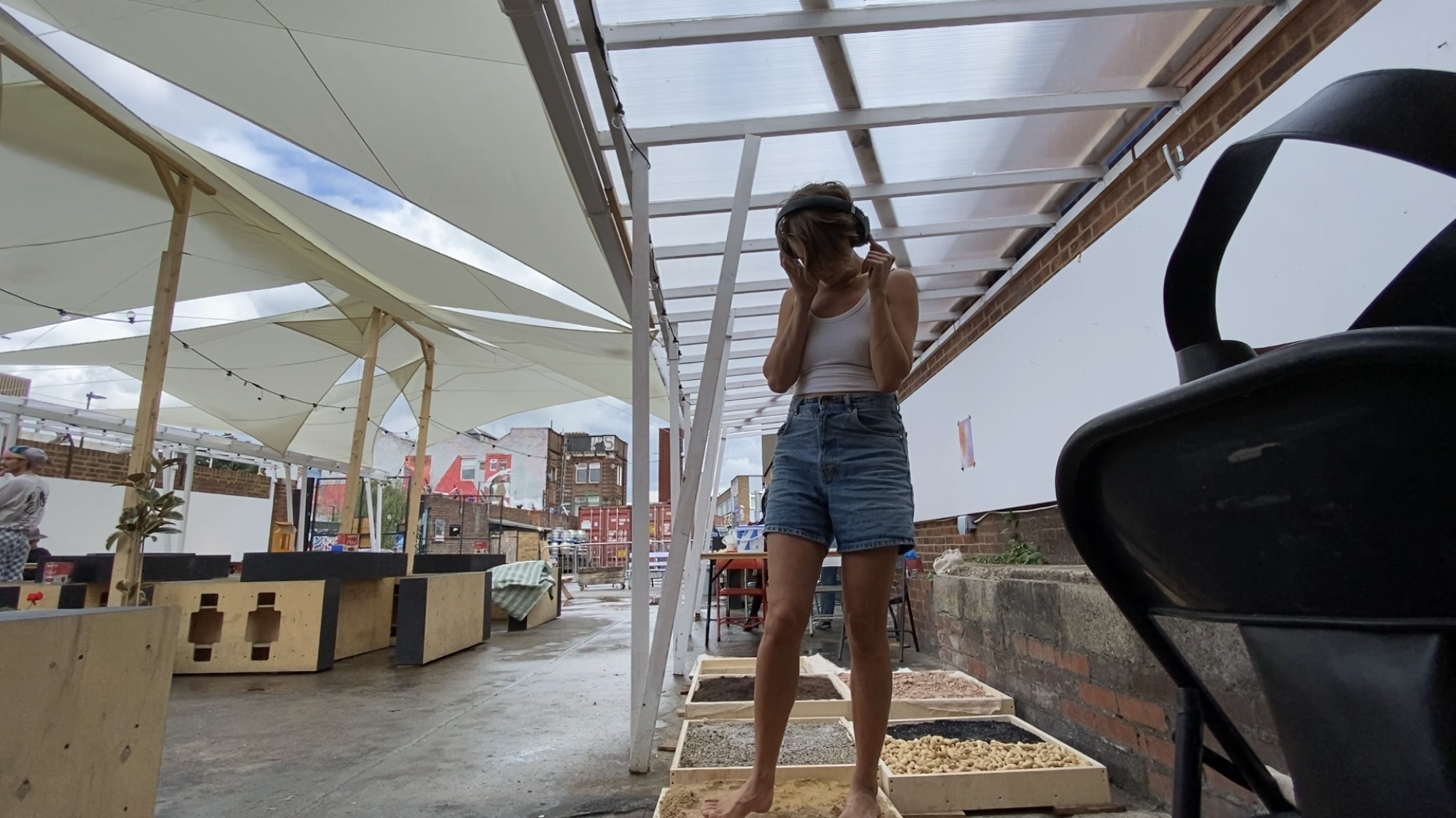
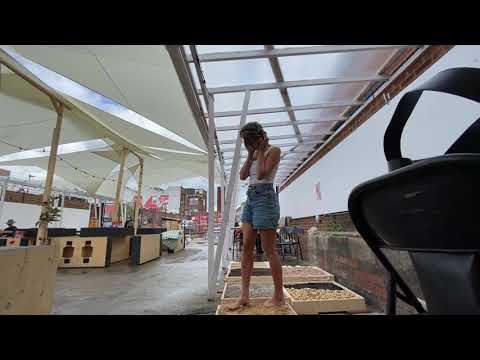
Visitor navigating the material platform barefoot while listening to the audio-scape
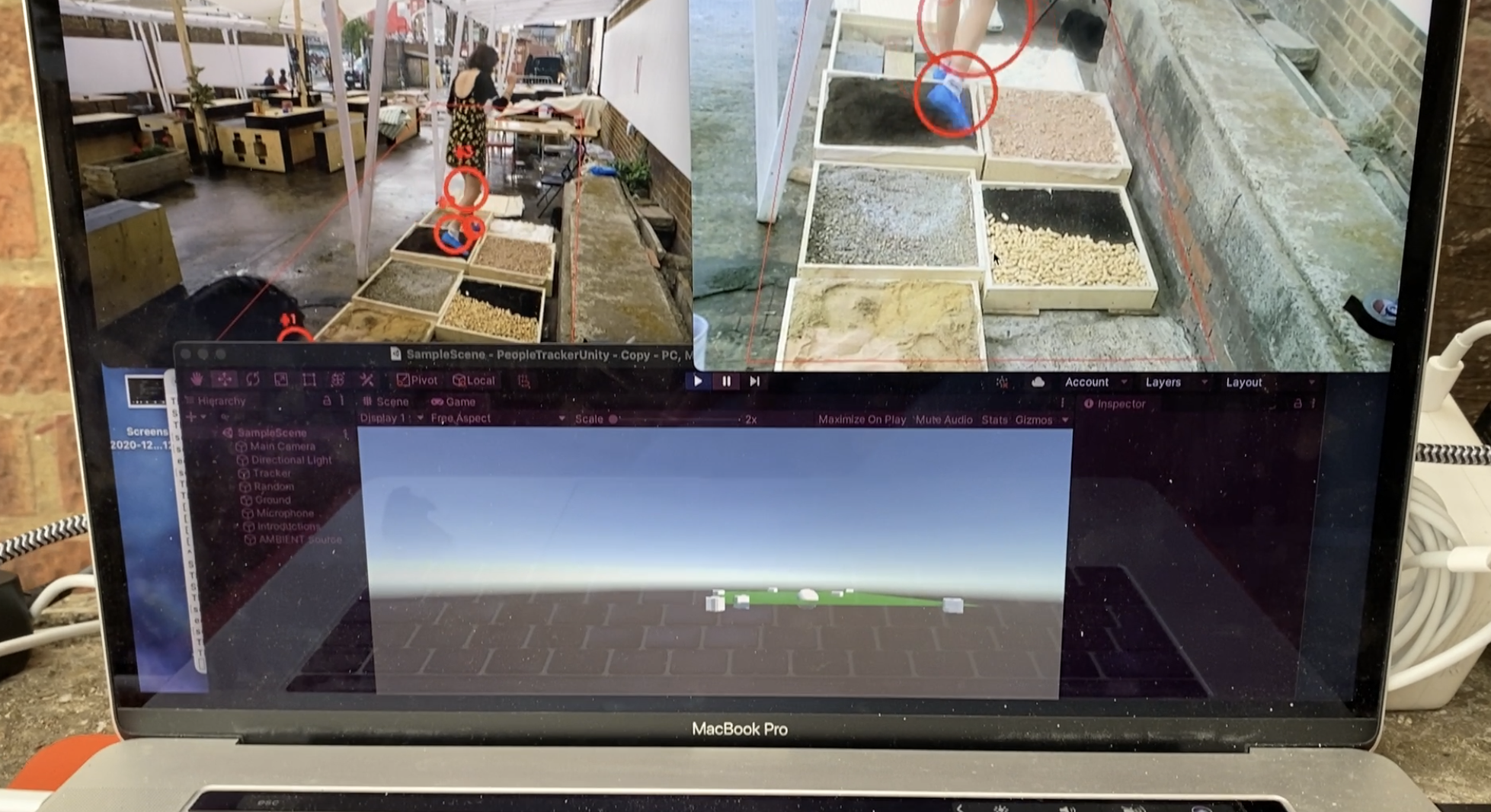
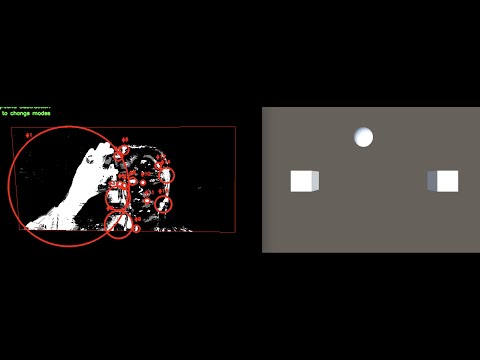
Motion tracking — camera feeds mapped to Unity for real-time position detection
Peanut shell texture — referencing the industrial past of Hackney Wick and Fish Island
Pebbles from Hackney Marshes and the canal-side — evoking the textures of the neighbourhood
First platform prototype — material sensory experience in action.
Motion tracking — first iteration
The first tracking setup used two cameras to register movement from different angles, mapping frame-by-frame differences to detect motion across the platform. While functional, this approach produced a vague and imprecise response — contingent on full-body movement rather than intentional directional input. This limitation drove the next iteration.
In response, the team switched to tracking head movements and directional angles as the mechanism for navigating the audio-scape. This shift produced more accurate, responsive feedback — creating a more intuitive relationship between body orientation and sound.
Following the White Post installation, <unspace> was presented at Ars Electronica — one of the world's leading festivals for art, technology, and society — extending the project's reach to an international audience and opening conversations around community memory as a global design practice.
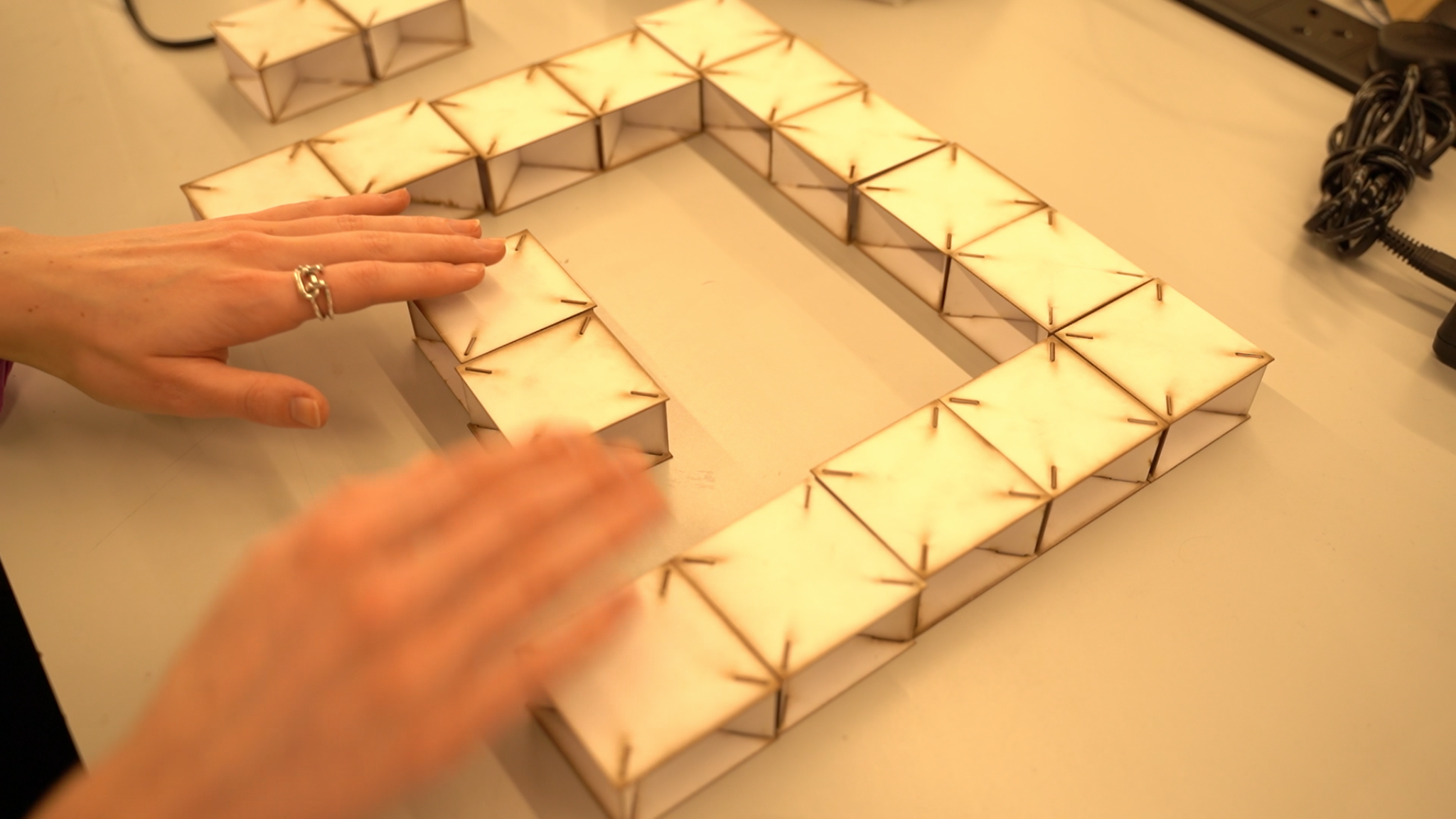
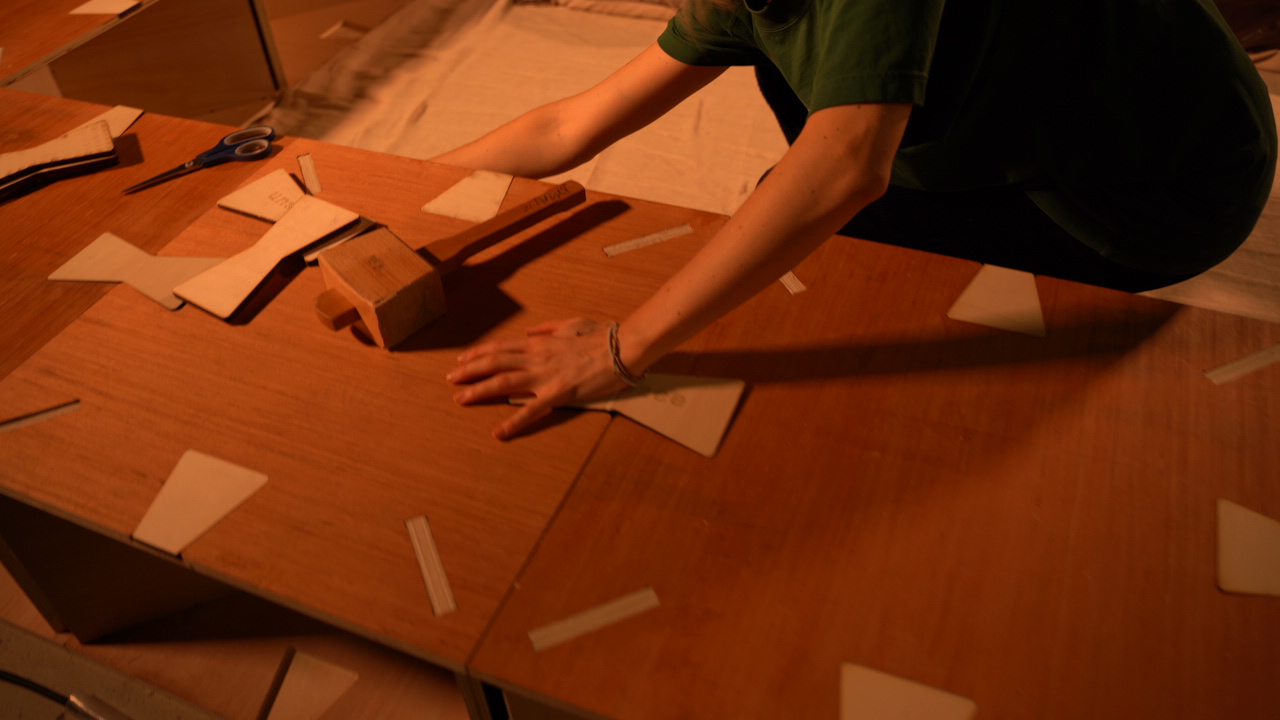
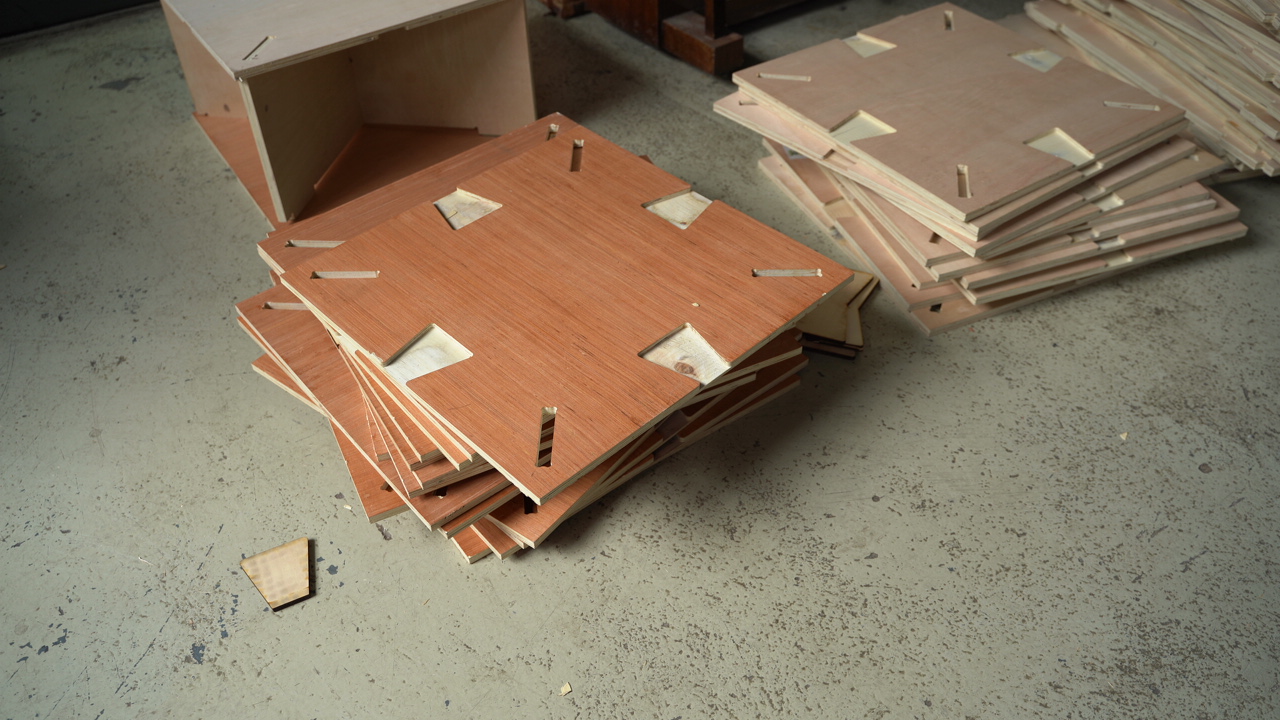
The next phase focused on producing an architectural-scale modular platform that could be transported, assembled, and reproduced by other communities. Individual box units were designed from dismantleable pieces joined by wood connectors, with carrier bags that communities could fill with their own local and historical materials. The modularity was central to the concept: <unspace> is not a fixed installation but a transferable process and tool.
Making & process
Scale model — modular unit system
Platform construction — plywood modules with wood connectors
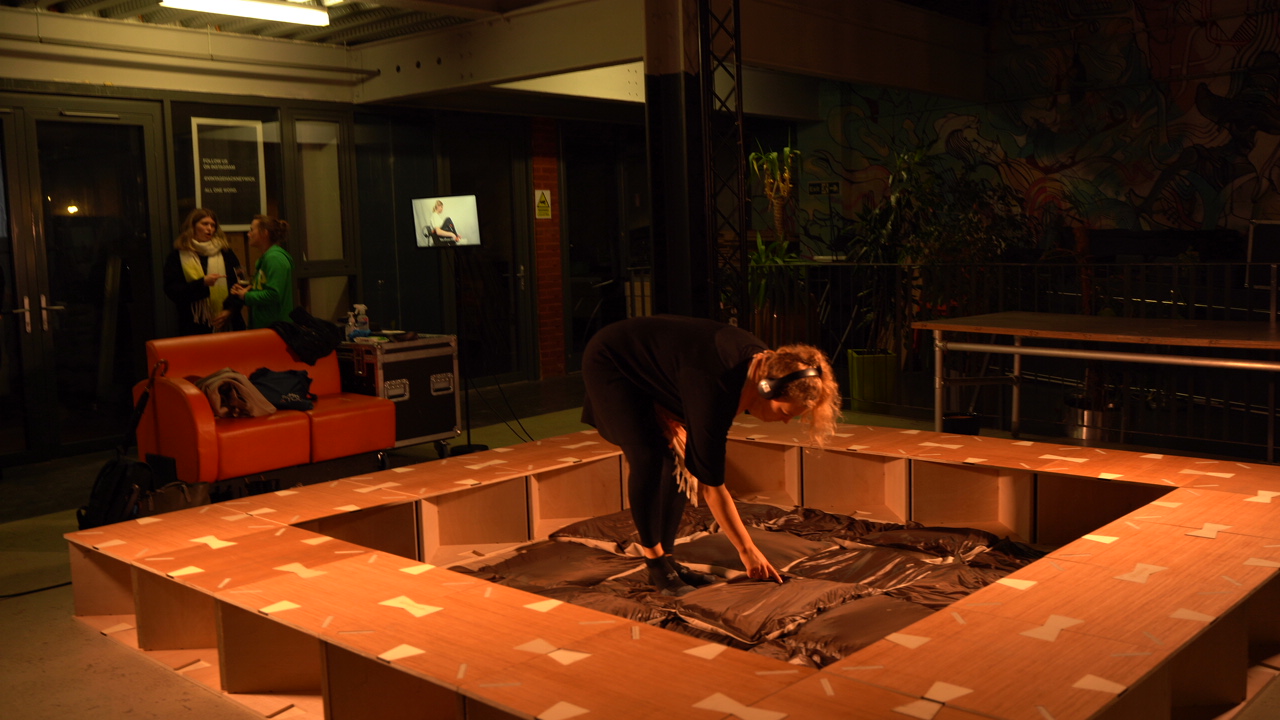
Assembled modular platform ready for installation
Felt archive — material memory
Material iteration — from exposed to hidden materials
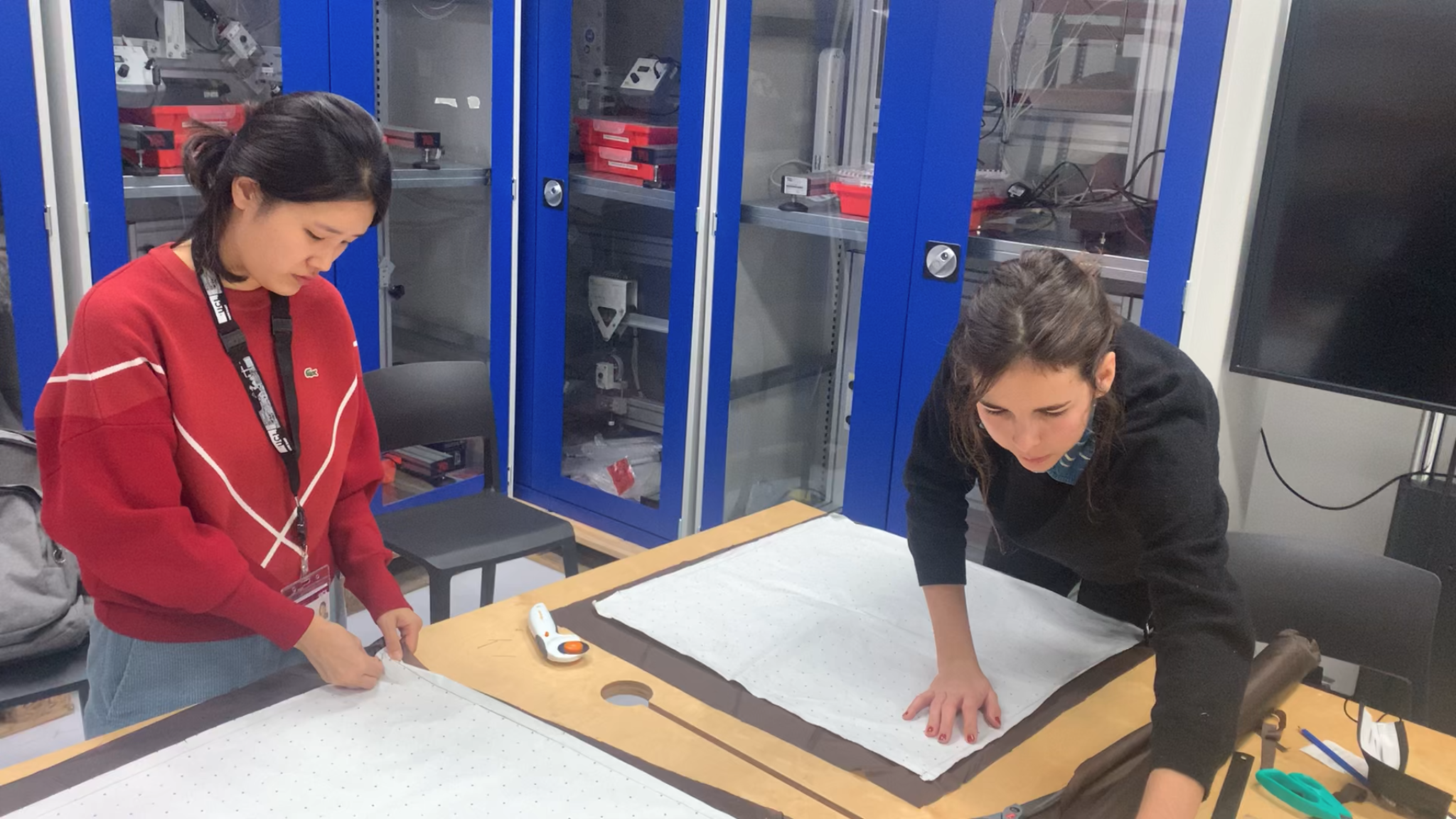
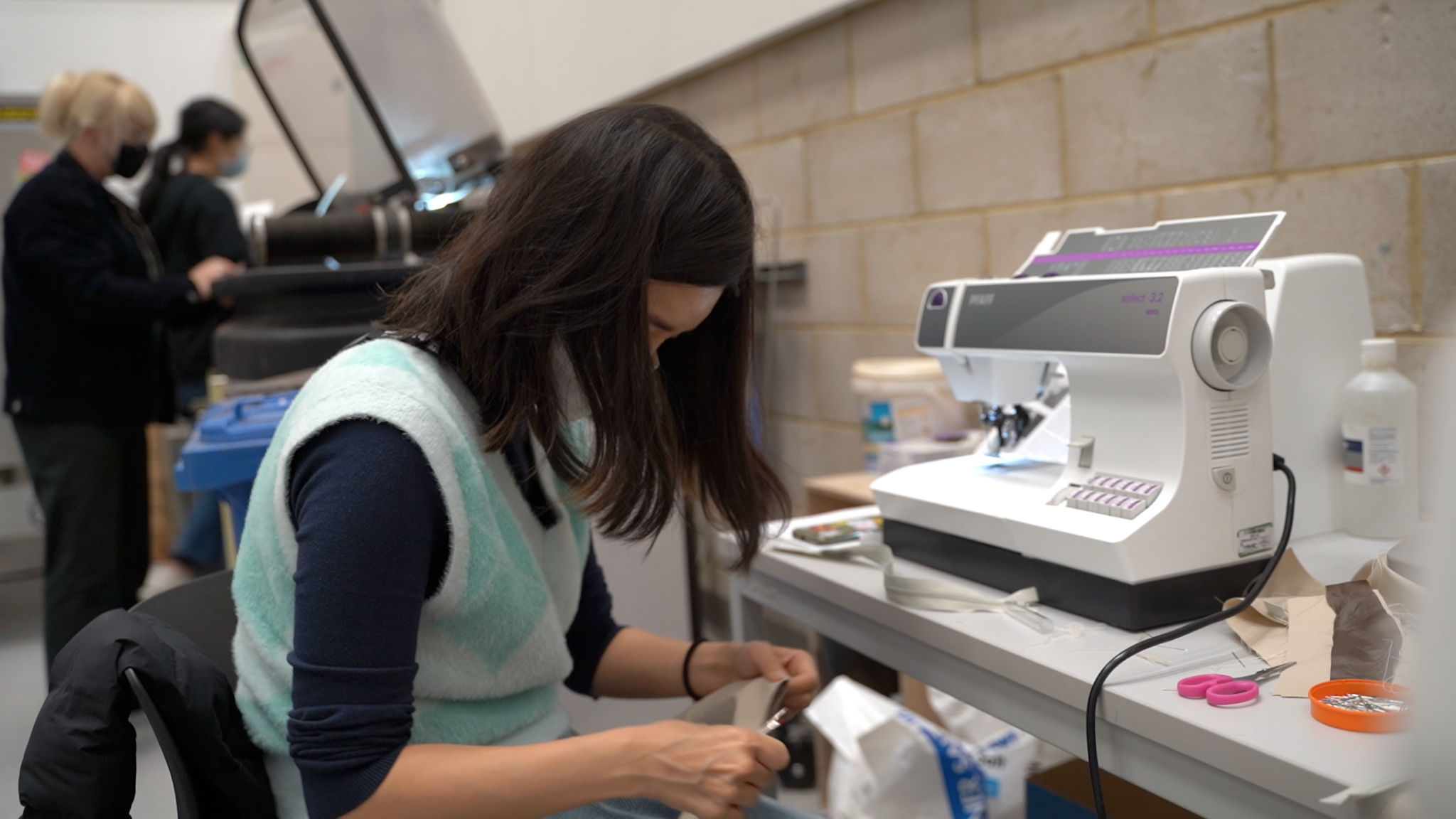
Pattern-making — technical fabric cover
Fabrication in the workshop
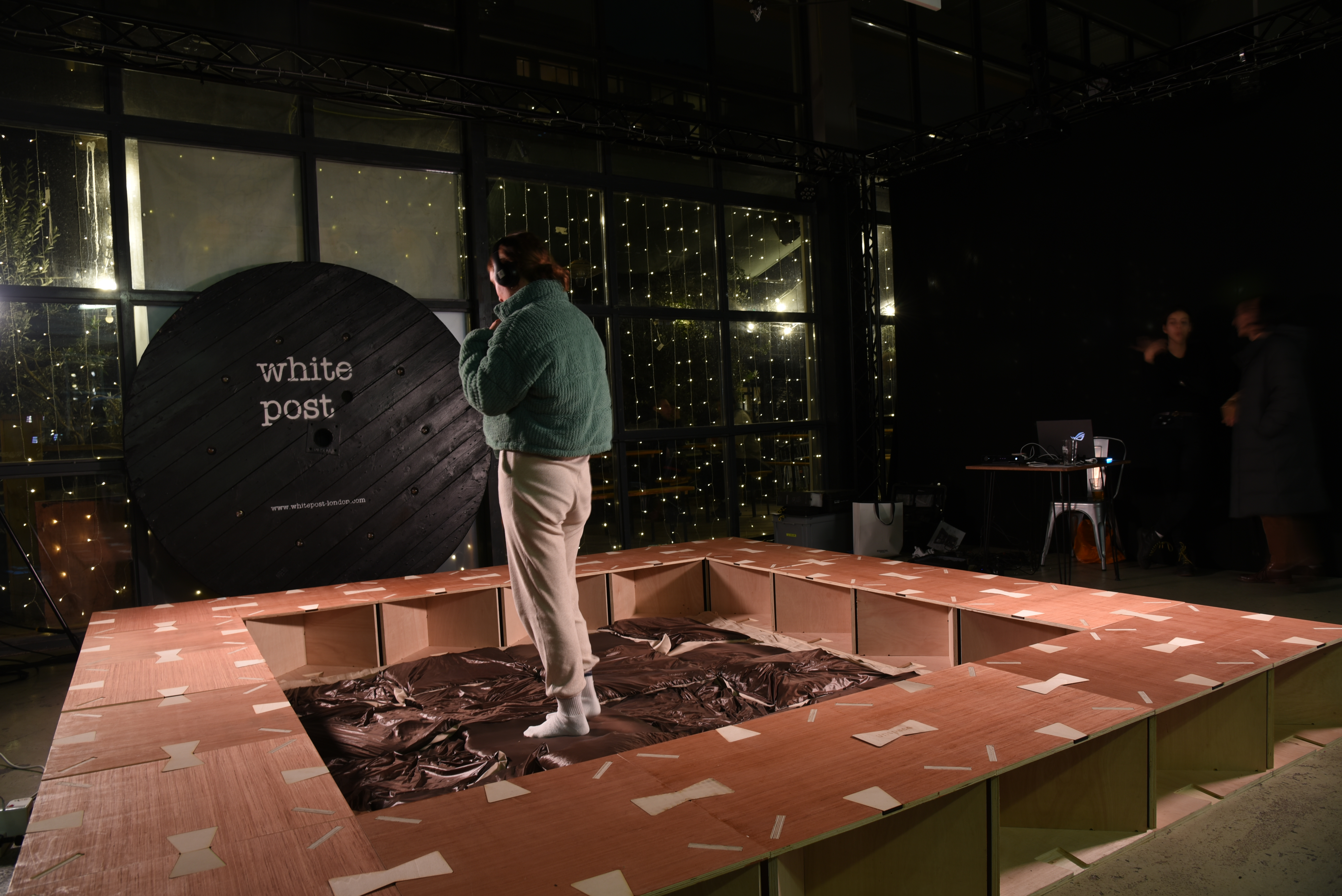
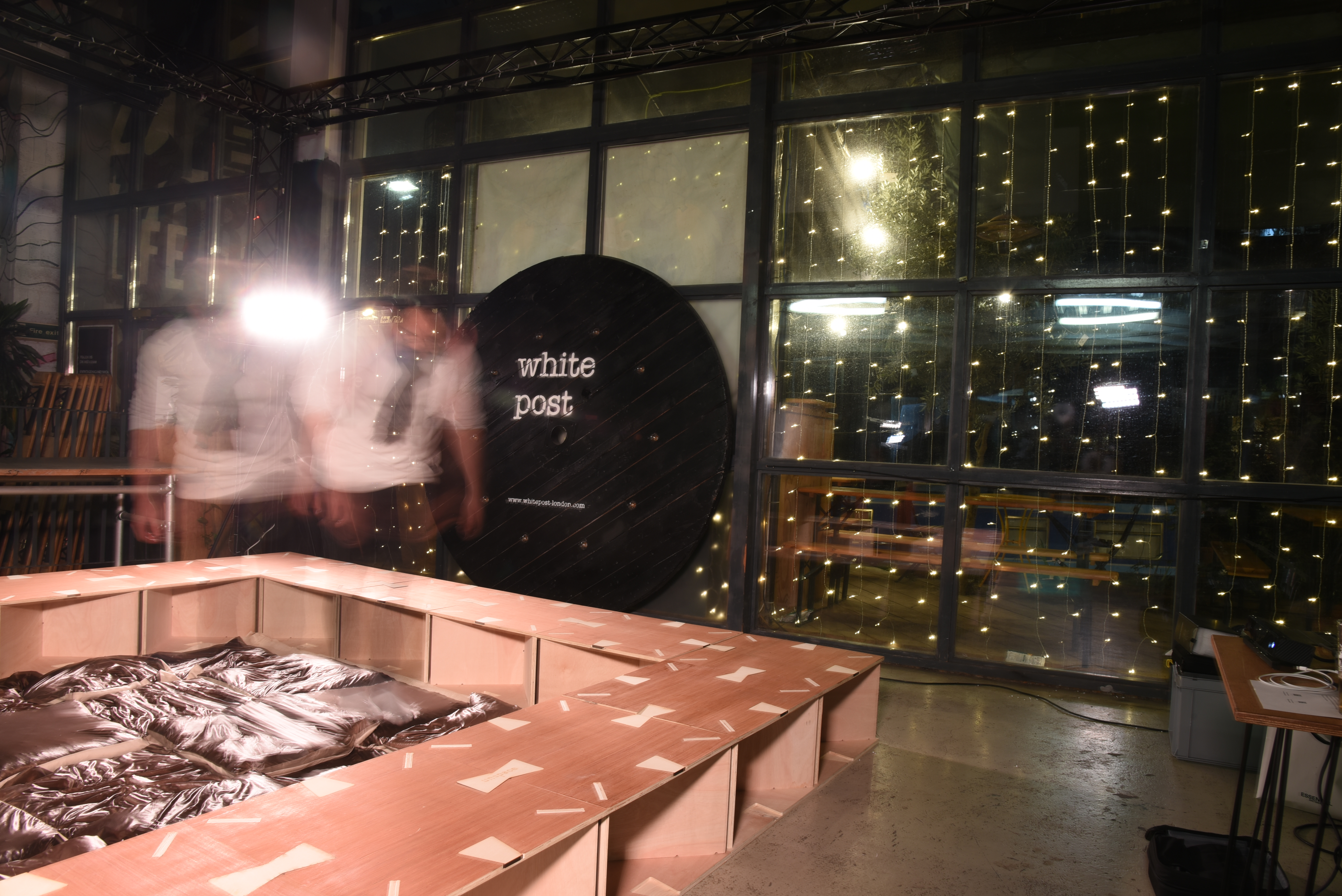
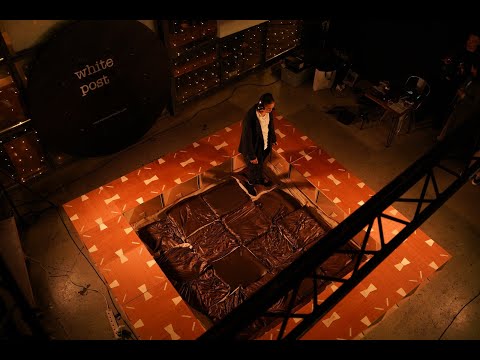
Final installation — White Post, Hackney Wick (Nov 2021)
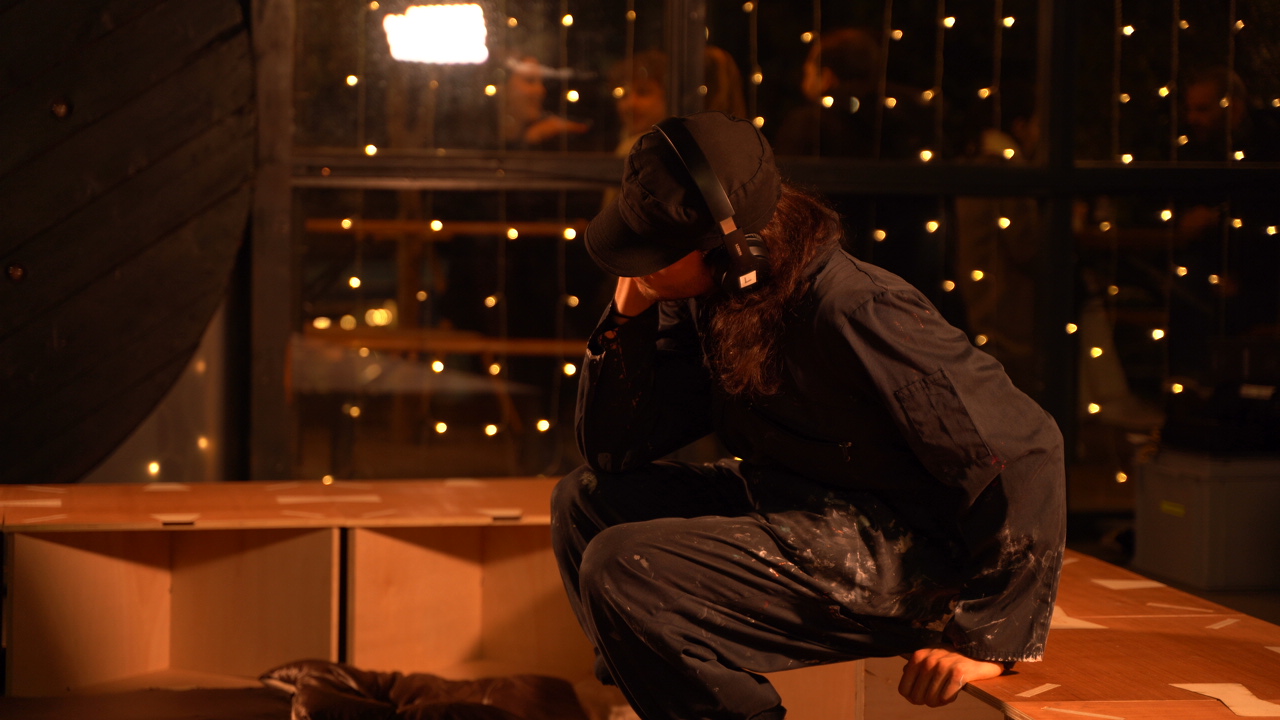
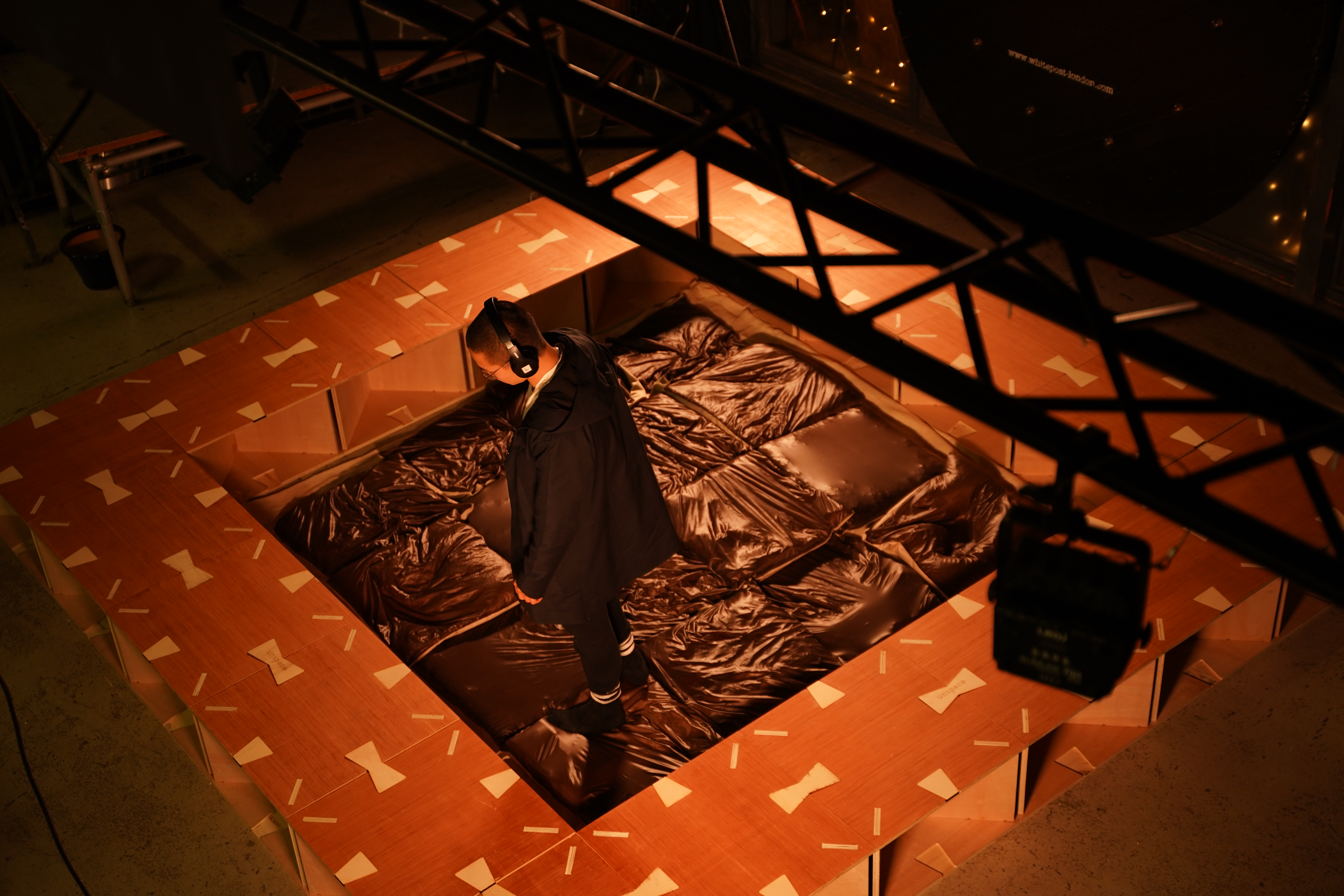
The final installation introduced two key experiential refinements. First, materials were hidden beneath a thin technical fabric — preserving high sensory sensation while removing the visual prompts that had caused visitors to navigate consciously rather than exploratorily. Second, the team switched to Kinect-based tracking, focusing on head position and directional movement. Audio sources were placed at varying heights in the Unity world, encouraging visitors to sit, crouch, and lie down on the platform surface in search of sounds — transforming the body into an active instrument of exploration.
Exhibition — White Post, Hackney Wick
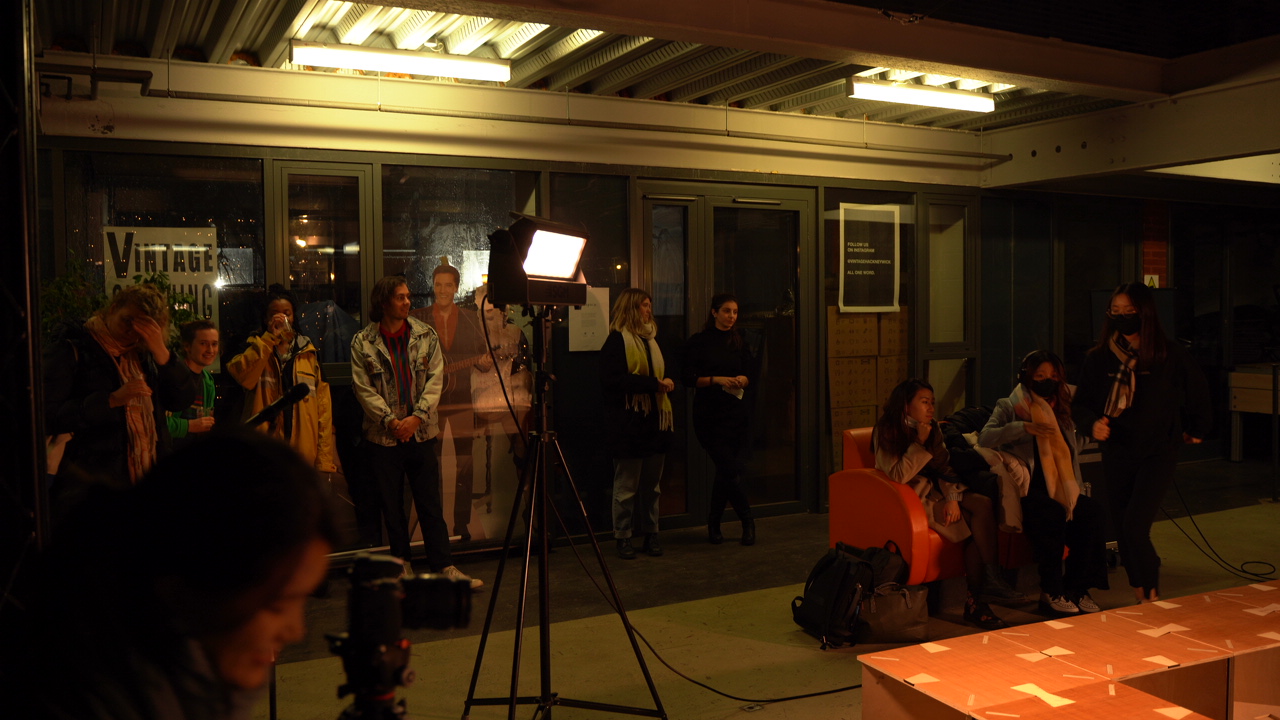
Exhibition night — White Post, Hackney Wick (Nov 2021)
Visitor navigating the audio-scape with headphones
Visitor experiencing the installtaion 2
Audience interacting with the installation
Audience gathered during performance
Thesis
The project was grounded in a broader academic enquiry: how do communities build resilience through shared memory in the face of ecological and social change? The thesis positioned <unspace> as a mechanism for local–global interaction — a way to reconcile threatened communities and individuals through interconnected memory rather than static preservation.
Key proposition
Resilience is not a fixed state but a continuous process of adaptation. As the sense of community shifts under pressure from gentrification, displacement, and environmental change, <unspace> offers an alternative framework: bridging memories not just within a single locality, but across communities — seeding a coalition built on interconnectedness.
Documentation
End-to-end project documentation, covering research, making, and exhibition — including the project brief.
Watch on YouTube ↗Website build and design — promoting and archiving the Hackney Wick community as <unspace>'s first project.
Seed project
<In Dust> — where <unspace> began
<unspace> grew directly out of <In Dust> — a VR memory-scape developed at the Interactive Architecture Lab, The Bartlett, UCL in 2021. <In Dust> explored reconstructive memory across past, present and future using dust as metaphor, collecting stories from 28 individuals during lockdown. The sensorial concept of a navigable memory-scape carried forward into <unspace> as a physical, community-rooted platform.
View <In Dust> case study →
Reflection
This project shaped how I think about design's relationship to place and community. Working directly with Hackney Wick residents meant that every design decision — what materials to use, how to track movement, how to present the archive — had to earn its place in relation to real people and a real neighbourhood in flux.
The iterative process of refining the physical and technical experience reinforced something I carry into all my work: good interaction design is felt before it is understood. The most meaningful shift in the project wasn't a technical one — it was the decision to hide the materials, remove the visual logic, and trust the body to find its own way through.